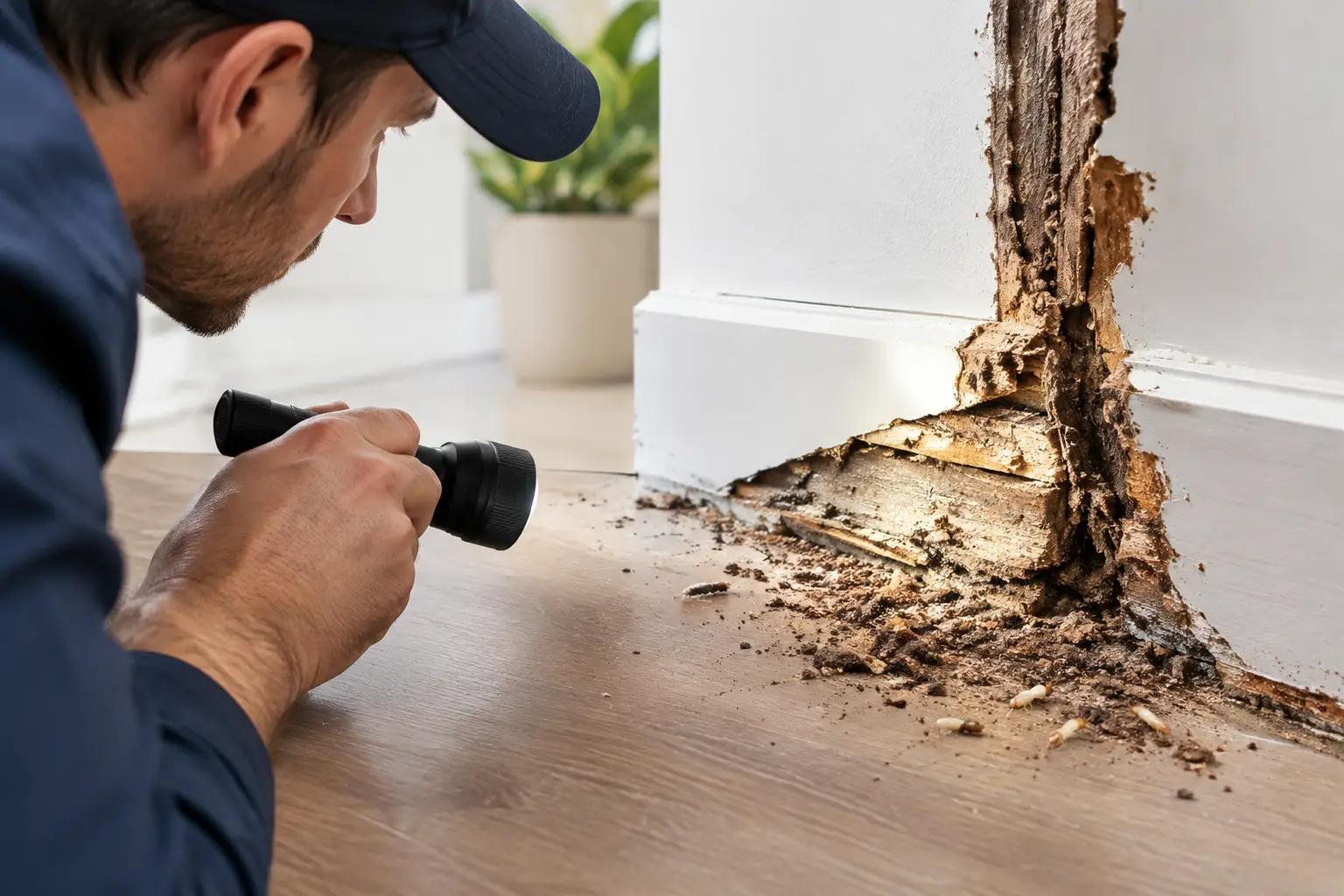
A door that suddenly sticks, a faint hollow sound in a skirting board, or a thin line of mud near the slab can be easy to dismiss. Yet these are among the top signs termite damage may be developing behind the surfaces of your home. Termites often work out of sight, so by the time obvious timber failure appears, the damage can be extensive.
For Melbourne property owners, early action is the best protection. A professional termite inspection can confirm what is happening, identify conditions that attract termites and give you a clear treatment plan before a small issue becomes a major repair bill.
Top signs termite damage to look for
Termites eat timber from the inside out. That means a wall, floorboard or door frame may look mostly normal on the surface while its internal structure has been weakened. The signs below do not always prove termites are present - moisture problems, rot and other pests can look similar - but each one warrants a proper inspection.
Hollow-sounding or damaged timber
Tap lightly on exposed timber around door frames, skirting boards, window frames and built-in cabinetry. Timber affected by termites can sound hollow, papery or unusually thin because the insects have consumed the softer material within it.
You may also notice timber that breaks or crumbles with very little pressure. Do not pull apart suspected areas to investigate further. Disturbing an active termite site can make the colony retreat and move to another part of the building, making treatment more difficult.
Mud leads on walls, foundations or pipes
Subterranean termites need moisture and protection while travelling between the ground and a food source. They build narrow shelter tubes, commonly called mud leads, from soil, saliva and wood particles. These may run up brickwork, concrete stumps, piers, pipes or internal walls.
A mud lead is one of the clearest warning signs and should be treated as urgent. Avoid breaking it open or spraying it with household insecticide. Leave it intact and arrange a licensed termite inspection so the activity can be assessed correctly.
Doors and windows that start sticking
A sticking door does not automatically mean termites. Seasonal movement, humidity and foundation issues can all affect joinery. However, termite activity can create moisture and damage around timber frames, causing doors or windows to become tight, uneven or difficult to close.
If the issue is new and appears alongside blistered paint, soft timber or fine cracking around the frame, it is worth getting checked. This is particularly true in ground-level areas close to gardens, patios, wet rooms or plumbing.
Blistered paint or bulging surfaces
Termites can damage timber just beneath painted surfaces, leaving paint looking bubbled, rippled or blistered. It is often mistaken for a simple water issue. Water damage is still a concern because damp conditions can attract termites, so either way, the source needs attention.
Walls may also appear slightly bowed or develop unexplained lines and dents. Do not assume cosmetic repairs will solve the problem. Before repainting or patching, have the affected area inspected for hidden pest activity and moisture.
Fine cracks in skirting boards and architraves
As timber loses strength, joints and finishes can shift. Small cracks near skirting boards, cornices, door trims and window architraves can be an early clue, especially when they appear with other changes in the same room.
On their own, hairline cracks are common in many Melbourne homes and may result from normal building movement. The concern rises when timber feels soft, sounds hollow or shows visible tunnelling nearby.
Frass or termite droppings near timber
Some termite species leave behind dry, pellet-like droppings known as frass. You may see small piles that resemble fine sawdust, pepper or tiny wood-coloured granules below a timber surface. Unlike ordinary dust, the pellets can be quite uniform in shape.
Not every termite infestation produces visible frass. Subterranean termites often use their waste in mud leads or concealed spaces instead. Still, unexplained material around timber, cupboards or window frames should be examined rather than swept away without a closer look.
Clicking sounds inside a wall
In a quiet house, a large termite colony can sometimes produce faint clicking, tapping or rustling noises from within a wall or ceiling. Worker termites may sound like soft scratching, while soldier termites can tap their heads against timber to signal danger.
Sound alone is not a reliable diagnosis. Plumbing, roof movement and other insects can make similar noises. But if you hear repeated activity close to damaged timber or a suspected mud lead, book an inspection promptly.
Why termites can be hard to spot
Termites avoid light and open air. They usually enter through tiny gaps around pipes, cracks in concrete, expansion joints, subfloor areas or timber that contacts the ground. From there, they can travel behind plasterboard, beneath flooring and inside wall cavities without being seen.
A neat, well-kept property is not automatically protected. Termites are looking for accessible timber, moisture and shelter, not mess. Homes with landscaped garden beds against walls, leaking taps, poor drainage, stored timber or concealed subfloor access may have more favourable conditions, but any property can be at risk.
Newer homes are not exempt either. Physical barriers and construction practices can reduce risk, yet barriers can be bridged by soil, mulch, paving or building alterations. Regular inspections remain the practical way to identify termite activity early.
What to do if you suspect termite activity
The first step is simple: do not disturb the area. Avoid removing mud leads, shifting damaged timber, drilling holes, applying supermarket sprays or trying to flood the site with chemicals. These actions rarely eliminate a colony and can scatter termites into hidden parts of the building.
Take clear photos from a distance, note where you found the sign and arrange an inspection with a licensed pest technician. A proper assessment checks accessible internal and external areas, identifies likely entry points and looks for moisture or construction conditions that support activity. If termites are found, the technician can recommend a treatment approach suited to the property and level of infestation.
Treatment is not always a one-size-fits-all job. Depending on the situation, it may involve a targeted treatment to active termites, a baiting system, a chemical soil treatment, or a combination of methods. The right option depends on the termite species, construction type, access, surrounding ground conditions and whether activity is active or historical.
Preventing future termite problems
Termite prevention is about reducing opportunity, not relying on one quick fix. Keep garden mulch, soil and stored timber below weep holes and away from external walls. Repair leaking taps, pipes and drainage issues quickly, and make sure subfloor ventilation is not blocked.
Try to keep timber structures, such as garden edging, pergola posts and stored firewood, from direct contact with the home where practical. If you are renovating, adding a deck or changing garden levels, consider how the work could conceal inspection zones or create a bridge over existing termite protection.
Annual termite inspections are a sensible baseline for many properties, though some homes may need more frequent checks due to past activity, building design or local conditions. For landlords and property managers, scheduled inspections also provide a clearer maintenance record and can help prevent unpleasant surprises between tenancies.
When to call for a termite inspection
Call promptly when you find mud leads, hollow timber, visible tunnelling, unexplained frass or sudden damage around timber frames. It is also wise to organise an inspection before buying a home, after water damage, or when completing renovations that affect ground contact and access areas.
All Guard Pest Control provides professional termite inspections and treatment for homes and businesses across Melbourne. Our licensed technicians assess the evidence, explain the next steps in plain English and focus on practical protection for your property.
If something in your home does not look right, trust that instinct. A fast inspection can replace uncertainty with clear answers and give you the best chance of stopping termite damage early.