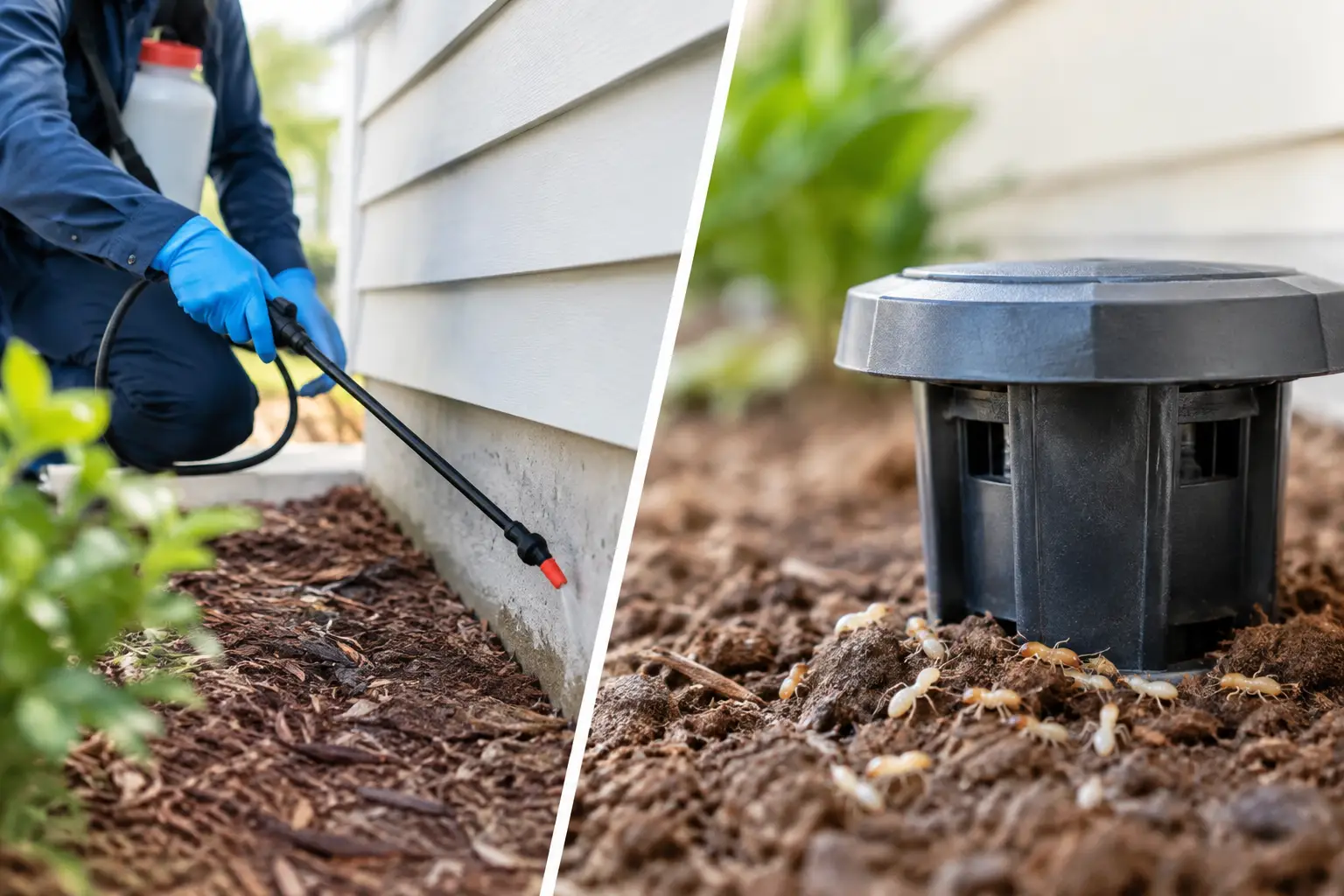
Termites can cause serious damage well before you see a visible sign. When comparing termite treatment vs baiting, the right choice comes down to what is happening at your property, how termites are getting in and how quickly protection is needed. Neither approach is automatically better in every situation. A professional inspection identifies the active risk first, then matches the treatment to the building and infestation.
What is a termite treatment?
A termite treatment usually refers to a liquid termiticide treatment applied around, beneath or directly into affected areas of a property. Its job is to create a treated zone that termites encounter as they move between the soil and your home or building.
For an active infestation, a technician may also treat accessible termite workings, timber or entry points. Depending on the construction, this can involve treating soil around the external perimeter, drilling through concrete or paving where needed, or applying product to carefully selected internal areas.
The main benefit is speed. A well-planned liquid treatment can provide an immediate protective measure around vulnerable areas and help stop termites from continuing to enter. It is often a practical option where there is confirmed activity, clear access to the perimeter and a need for prompt control.
That does not mean every property can be treated in exactly the same way. Slab construction, extensions, landscaping, paving, drainage, subfloor access and neighbouring structures all affect where treatment can be applied. A licensed technician should explain the proposed work before it begins, including any drilling, access requirements and follow-up recommendations.
When liquid treatment may suit
Liquid treatment is commonly considered when termite activity is active and localised, or when the property needs a protective treated zone as soon as possible. It can also suit homes where soil access around the building is reasonably straightforward.
For commercial premises, speed can be particularly important. Termite activity around timber fit-outs, storage areas, wall cavities or structural elements can create disruption and expensive repair risks. A targeted treatment plan helps protect the premises while keeping the process practical for staff, tenants and customers.
What is termite baiting?
A termite baiting system uses stations placed in the ground around a property, or sometimes in suitable areas where termite activity is found. These stations are inspected at scheduled intervals. If termites begin feeding in a station, a bait is introduced for workers to carry back through the colony.
Baiting is designed to affect the colony over time rather than simply creating a treated soil zone. The bait works gradually, allowing termites to feed and share it before the colony is disrupted. This slower action is deliberate, but it means baiting is not an instant fix.
Bait stations are useful where conventional soil treatment is difficult or limited. Think of properties with extensive concrete, close boundaries, established gardens, drainage concerns or areas where access is restricted. They can also be part of an ongoing termite management plan for homes with known risk factors.
The key word is monitoring. Bait stations do not work as a set-and-forget product. They need regular professional checks so activity can be detected, bait can be installed when appropriate and the system can be maintained properly. Missed inspections reduce the value of the system and may leave a developing risk unnoticed.
When baiting may suit
Baiting can be a strong option when termites are active but soil treatment is not practical across the relevant areas. It may also be recommended where a property needs long-term monitoring, particularly if past termite activity has been found nearby or conditions around the building make concealed entry more likely.
It is important to understand that termites may not feed in a station straight away. They follow moisture, food sources and underground pathways that can change over time. A baiting system requires patience, consistent inspection and a clear maintenance schedule.
Termite treatment vs baiting: the real differences
The biggest difference between termite treatment vs baiting is how each method manages the risk. Liquid treatment generally aims to establish a protective treated zone and can provide faster action at identified entry points. Baiting relies on termites finding and feeding on stations, then gradually spreading bait through the colony.
Liquid treatment may involve more physical work at the property, especially where concrete, paths or internal surfaces need to be accessed. Baiting is usually less intrusive to install, but it comes with an ongoing monitoring commitment. One method is not necessarily cheaper over the life of the system either. The right comparison should include initial work, follow-up inspections, site conditions and the level of protection required.
Another difference is visibility of results. With a liquid treatment, the work completed is immediate and the treated areas can be documented. With baiting, the result depends on termite feeding behaviour and the inspection program. Both should come with clear records of what was found, what was done and what needs to happen next.
Why a termite inspection comes first
Choosing a treatment without inspecting the property is a gamble. Termites often travel in concealed mud tubes, wall cavities, subfloors and garden areas. The visible damage or activity may be a long way from where they entered.
A thorough inspection looks for active termites, mud leads, moisture issues, timber-to-soil contact, poor ventilation, leaking plumbing, stored timber and building features that make inspection difficult. The technician also assesses whether termites can be treated directly, whether a treated zone is achievable and whether baiting stations are likely to add value.
This is especially relevant in Melbourne, where homes range from older weatherboards with accessible subfloors to newer slab homes with paving and landscaping tight against the building. The treatment needs to suit the construction, not just the pest.
If live termites are found, do not disturb them. Avoid spraying household insecticides, pulling away damaged timber or breaking open mud tubes. This can cause termites to retreat and establish a new concealed route, making the problem harder to locate and treat. Keep people and pets away from the area where practical, then arrange a prompt professional assessment.
Can treatment and baiting be used together?
Yes. In some cases, a combined approach gives a property the most practical level of protection. A technician may recommend direct treatment for active termites and a liquid treatment where access allows, while using bait stations to monitor areas that cannot be effectively protected with a soil treatment alone.
This is not about selling more services. It is about closing gaps. A large property with mixed construction, extensive paving, garden beds against external walls and known termite pressure may need more than one control method. Conversely, a smaller, accessible infestation may be managed effectively with a focused treatment and scheduled inspections.
The plan should be proportionate to the risk. Ask what activity was found, where the proposed treatment will be applied, what limitations exist and when follow-up checks are needed. A reliable provider will give straight answers rather than promise that one product solves every termite problem.
What happens after termite control?
Stopping active termites is only one part of protecting the property. Repairs should not begin until the technician confirms the activity has been addressed. Replacing damaged timber too early can conceal evidence that helps confirm whether termites are still present.
Ongoing inspections are also essential. Termites can enter through a new route months or years after an earlier treatment, particularly when moisture conditions change or landscaping and renovations alter access around the building. Keep garden mulch, stored timber and other cellulose materials away from the external walls where possible. Fix leaks promptly, maintain drainage and make sure subfloor vents are not blocked.
For landlords and property managers, document inspections, findings and treatments. Clear records support maintenance planning and help address issues before they become larger repair jobs. For businesses, scheduled termite inspections can reduce the risk of damage developing unnoticed in low-traffic storage, plant or service areas.
Choosing the right approach for your property
The best termite solution is the one based on evidence, not a one-size-fits-all promise. Liquid treatment may be the fastest and most suitable response where a treated zone can be established. Baiting may be the better fit where access is limited or long-term colony monitoring is needed. Sometimes both are justified.
If you have found termite activity, need a pre-purchase inspection or want to protect a property with previous history, act early. All Guard Pest Control can assess the site, explain your options in plain English and provide a practical treatment plan backed by licensed, insured technicians. A timely inspection gives you the information needed to protect the property before small signs become costly damage.