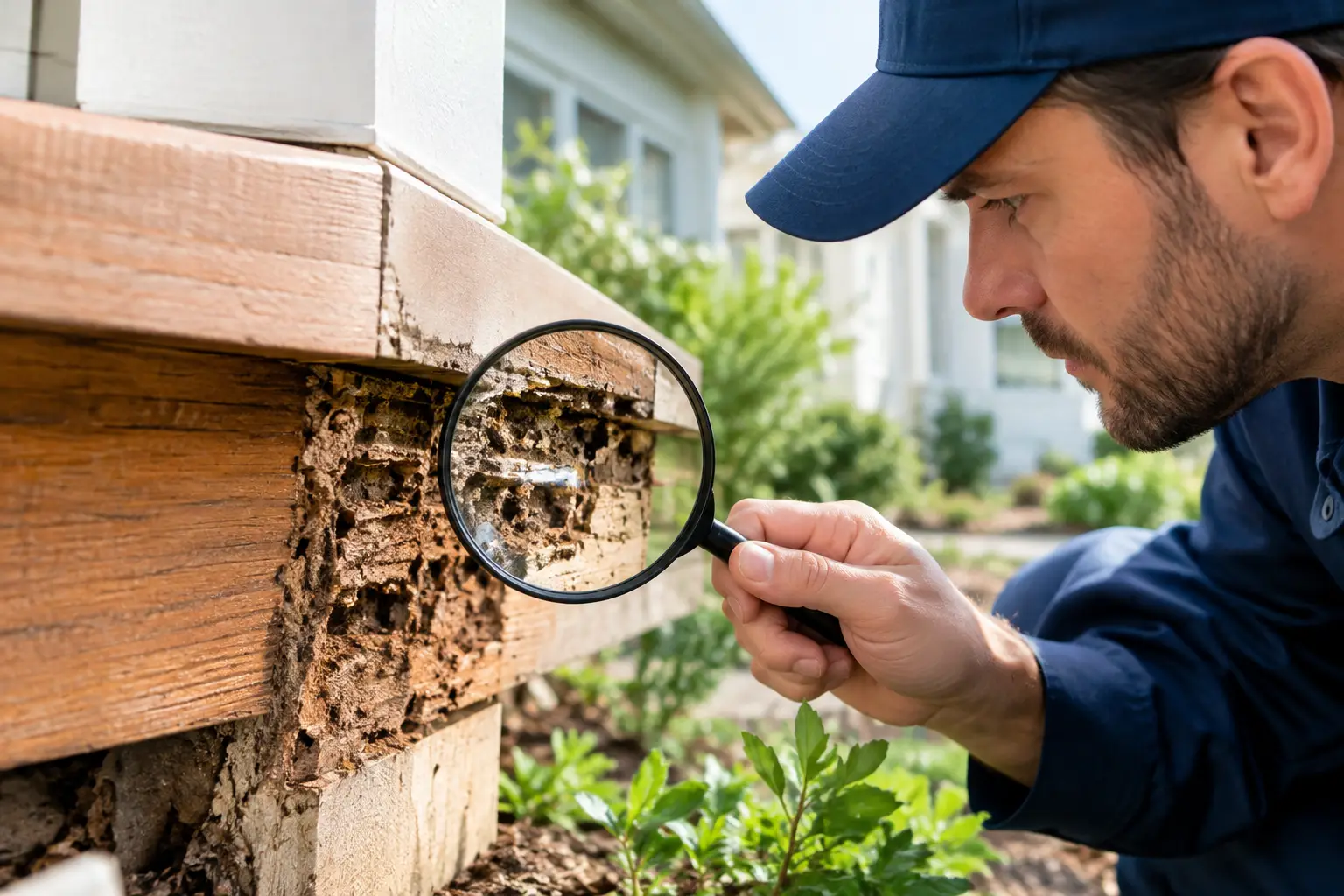
A termite problem can stay hidden behind a wall, under a floor or inside a timber frame for months. By the time a door sticks, skirting boards sound hollow or paint begins to bubble, repairs can be significant. That is why termite insurance coverage is one of the first things Melbourne homeowners, landlords and property managers ask about after spotting possible activity.
The difficult answer is that standard home and contents policies commonly do not cover termite damage. Insurers generally treat termite damage as gradual deterioration or a preventable maintenance issue, rather than a sudden insured event. Policy wording differs, however, so the only reliable answer is in your current Product Disclosure Statement and confirmation from your insurer or broker.
What you can control is early detection, professional treatment and a clear record of inspections. Acting quickly gives you the best chance of limiting structural damage before it spreads.
Why termite damage is often excluded
Most building insurance is designed for sudden, accidental events such as storm damage, fire, burst pipes or impact damage. Termites work differently. They can enter through tiny gaps around plumbing, expansion joints, subfloors and garden areas, then feed on timber out of sight.
Because this activity builds over time, many insurers classify the damage as wear, tear, maintenance failure or gradual damage. Even when your policy includes broad building protection, that does not automatically mean it pays for termite treatment, timber repairs or replacement of damaged fittings.
This can feel unfair, particularly when there were no obvious warning signs. But insurers may expect property owners to take reasonable steps to maintain the building and address known risk factors, such as timber in contact with soil, moisture leaks or poor subfloor ventilation.
There are exceptions in some policies and circumstances. For example, a policy might respond to a separate insured event that exposes previously unknown damage, but this is not something to assume. Read the exclusions closely and ask direct questions before relying on any cover.
What termite insurance coverage may include
There is no single definition of termite insurance coverage in Australia. Some homeowners refer to their standard building policy. Others mean an inspection warranty, a termite management agreement or cover connected with a new-build warranty. These are different products with different limits.
A building policy may cover the cost of repairing damage caused by a listed event, but it can still exclude insects and vermin. A pest-control warranty may provide a limited retreatment promise if termites return after a treatment. It may not cover pre-existing damage, the cost of structural repairs, conditions outside the treatment area or activity caused by a new risk factor on the property.
If you are comparing any termite-related protection, check the practical details rather than the product name. Ask what happens if live termites are found, whether follow-up inspections are included, what areas are covered, how long the agreement lasts and whether repair costs are excluded. Also check your responsibilities, including maintaining drainage, access and any physical or chemical barrier system.
A cheaper option is not always poor value, but it may provide less inspection frequency, a narrower treatment zone or a lower cap on any benefit. The right choice depends on the property’s construction, age, location and known termite pressure.
The steps to take before making a claim
If you suspect termites, do not pull apart damaged timber, spray household insecticide or disturb mud leads. Termites may retreat to another part of the building, making the colony harder to locate and assess. Keep people away from visibly weakened timber where possible, particularly around decks, steps or floors.
Arrange a professional termite inspection as soon as possible. A qualified technician can inspect accessible areas, identify signs of active termites, assess likely entry points and recommend the right treatment or monitoring approach. This assessment also gives you a written record that can support conversations with an insurer, builder, body corporate or property manager.
Take clear photos of visible signs before repair work begins. Keep copies of inspection reports, treatment documentation, invoices, building reports and correspondence with your insurer. If you intend to make a claim, contact your insurer before authorising major repairs, unless urgent safety work is needed. They may need to inspect the damage or nominate their own assessor.
For rental properties, landlords should act promptly when a tenant reports possible termite activity. Tenants should report concerns in writing and avoid trying to treat the problem themselves. Fast communication helps protect the property and creates a clear record of when the issue was raised.
Prevention is the protection you can rely on
Insurance may be uncertain, but prevention is practical. Regular inspections are particularly valuable because termite activity is usually hidden until damage becomes advanced. Many properties benefit from an annual professional termite inspection, although higher-risk homes may need a more tailored schedule.
Risk can be reduced by keeping soil and garden mulch below the weep holes, moving stored timber and cardboard away from the building, repairing leaking taps and pipes, and ensuring subfloor ventilation remains clear. Do not bridge termite barriers with soil, paving, garden beds or timber structures without advice. These changes can give termites a concealed route around existing protection.
Renovations can also change the risk. New decking, extensions, planter boxes, plumbing alterations and landscaping may affect access for inspections or compromise a barrier. Before work starts, ask how the changes will affect termite management and whether an updated inspection or protection plan is needed.
For commercial sites, schools, childcare centres, retirement villages and facilities with multiple buildings, planned inspections are especially useful. A termite issue can affect safety, operations, tenant confidence and maintenance budgets. Routine checks create a clearer maintenance trail and allow treatment to be scheduled before damage becomes disruptive.
Building type and ownership can change the answer
Standalone houses usually place termite inspection and treatment responsibility on the owner. In a townhouse, unit or apartment, responsibility may depend on whether the affected structure is private property or common property. Your strata plan, by-laws and insurance arrangements will guide the next step.
Do not assume the body corporate policy covers an individual owner’s internal damage, or that the owner is responsible for all external treatment. Report the issue promptly to the owners corporation or strata manager, then arrange advice on access and treatment scope. Termites do not respect lot boundaries, so a coordinated response is often more effective than isolated work.
For a property being bought or sold, a timber pest inspection is separate from insurance. It is a practical check of accessible areas at a point in time, not a guarantee that termites will never appear. Still, it can identify active activity, damage and conditions that need attention before settlement or major negotiations.
When fast action matters most
Call for urgent help if you find live termites, mud leads on walls or stumps, hollow-sounding timber, sagging floors, unexplained damage around door frames, or wings near windows and doors. These signs do not always confirm termites, but they justify a proper inspection.
All Guard Pest Control provides professional termite inspections, treatment and prevention support across Melbourne, including northern, western and eastern suburbs. Licensed technicians can assess the situation, explain the recommended work in plain English and help you put a practical protection plan in place.
Termite damage is stressful enough without discovering too late that your policy excludes it. Check your insurance wording now, keep your property maintained and arrange an inspection at the first sign of trouble. Early action is often the most valuable cover a property owner can have.