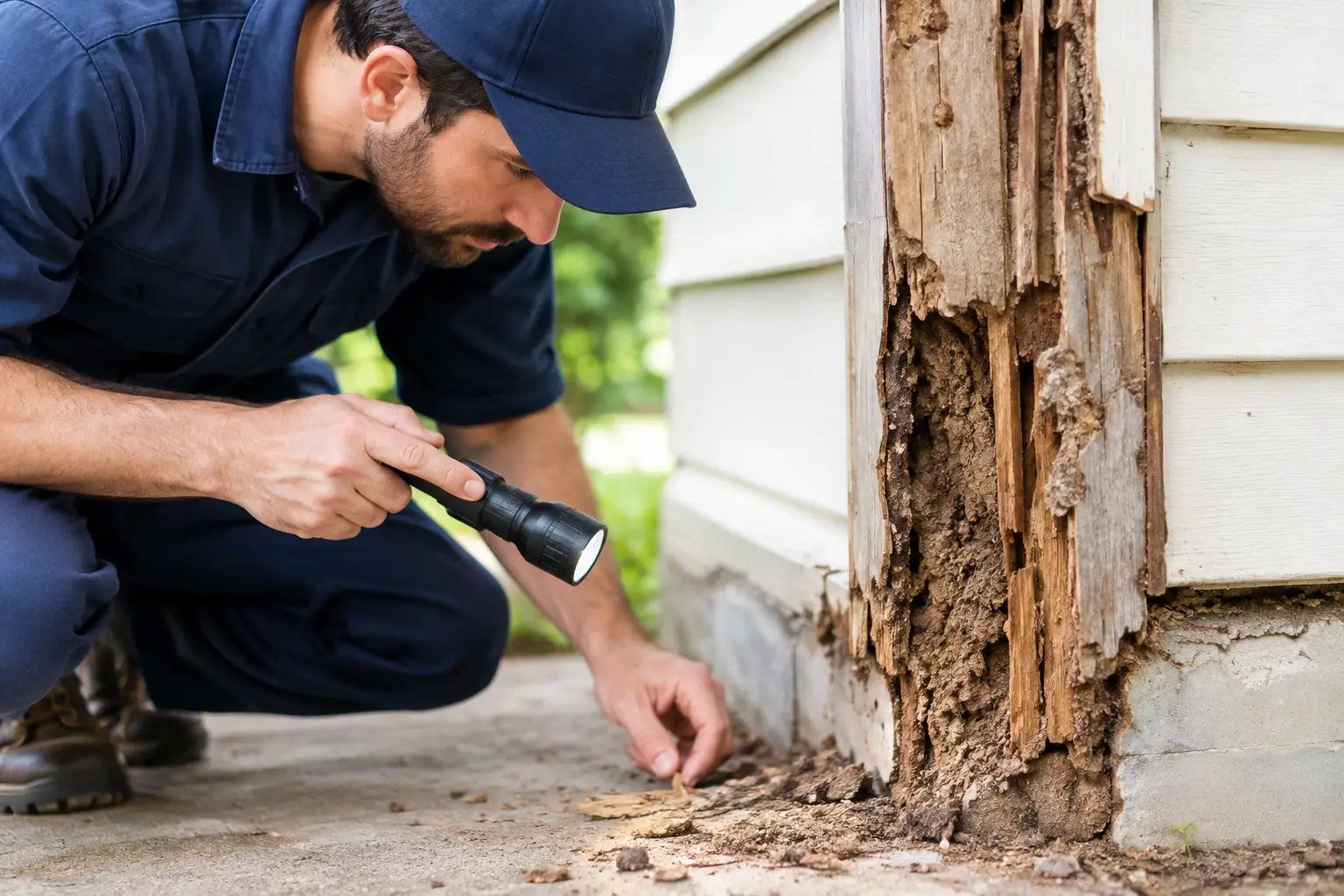
A timber skirting board that suddenly sounds hollow, a faint line of mud beside a wall, or a door that has begun sticking can be more than a maintenance issue. Termite activity is often hidden long before obvious damage appears, which is why prompt inspection matters for Melbourne homes, rental properties and commercial premises.
Termites work out of sight. They travel through soil, wall cavities, subfloors and timber framing, feeding continuously while avoiding light and open air. By the time a homeowner or facilities manager sees surface damage, the colony may have been active for some time. A fast, professional assessment gives you clear answers and a practical plan before the problem becomes more expensive.
What termite activity looks like in a property
The clearest signs are not always dramatic. In many cases, termites leave subtle evidence around areas where timber meets soil, moisture collects or concealed building materials are easy to reach.
Mud tubes are one of the most recognisable signs. These narrow, earth-coloured tunnels may appear on brickwork, concrete stumps, retaining walls, pipes or inside a subfloor. Subterranean termites use them to move between the ground and a food source while retaining the moisture they need to survive. Do not knock every tube away before an inspection. An intact section can help a technician determine whether it is current activity and where termites may be entering.
Damaged timber can also look different from ordinary rot. Termite-damaged wood may sound hollow when tapped, feel thin beneath a painted surface, or break away to reveal galleries running with the grain. Floors may feel springy, architraves can become fragile, and door or window frames can begin to bind as hidden timber is weakened or distorted.
Other warning signs include small piles of dirt near an entry point, bubbling paint, unexplained cracks in plaster, loose tiles, or power points that no longer sit firmly against the wall. None of these signs confirms termites on its own. Water damage, movement in the building and ageing materials can create similar symptoms. That is exactly why guessing is risky.
Areas worth checking carefully
Termites are drawn to accessible timber and favourable moisture conditions, not untidy homes. A clean, well-kept property can still be affected. Pay close attention to garden beds built against walls, timber edging, decks, pergolas, stored timber, leaking taps, overflowing gutters and air-conditioning overflow points.
Underfloor spaces are particularly important. Poor drainage, inadequate ventilation, leaking plumbing and timber debris can create conditions termites favour. In a commercial setting, vulnerable areas can include loading zones, planter boxes, service penetrations, storage rooms and landscaping next to the building.
Why Melbourne properties can be vulnerable
Termite risk varies from property to property. Construction type, soil conditions, drainage, landscaping and nearby vegetation all play a part. Homes in established suburbs may have older timber elements and concealed subfloors, while newer builds can still be at risk if soil-to-timber contact, moisture issues or disturbed termite barriers are present.
Building activity across growth areas can also alter ground conditions and disturb termite populations. That does not mean every property has termites, but it is a good reason not to treat a visual check as adequate protection. Termites can enter through gaps around pipes, expansion joints and cracks too small to notice during a casual walk-around.
For schools, childcare centres, retirement villages, restaurants, factories and retail sites, the stakes extend beyond repair costs. Hidden damage can affect safety, day-to-day operations and property compliance. A planned inspection program is usually easier to manage than an urgent response after damage is found.
What to do when you find possible termite signs
If you suspect termites, avoid spraying insecticide, flooding the area or pulling apart affected timber. These actions can disturb the colony, push termites into another part of the structure and make professional detection harder. Store-bought sprays may kill a small number of visible insects without addressing the colony or its access point.
Instead, take a clear photo from a distance, keep children and pets away from damaged or unstable areas, and arrange a licensed termite inspection as soon as possible. If the suspected area is structural, such as a floor, wall frame or support post, limit traffic around it until it has been assessed.
A thorough inspection should look beyond the obvious sign. A qualified technician checks accessible internal areas, the exterior perimeter, subfloor or roof void where available, and conditions that may be contributing to termite entry. Moisture readings and specialised detection equipment may be used where appropriate. The goal is to identify whether termites are active, locate likely pathways and recommend treatment based on the building and infestation.
Treatment depends on the colony and the building
There is no single treatment that suits every termite problem. The right approach depends on whether activity is confirmed, where it is located, how the property is built and whether access is available.
In some cases, a targeted treatment to an active area may be recommended. In others, a perimeter soil treatment or baiting system may offer the most suitable long-term control. Baiting can be useful where direct treatment is difficult or where the colony needs to be eliminated through its feeding behaviour. Soil treatments can create a treated zone around vulnerable parts of a building, but their effectiveness relies on correct application and site conditions.
The trade-off is time versus access and coverage. A quick visible treatment may feel reassuring, but it is not automatically a full solution. A more comprehensive plan may involve follow-up inspections, monitoring or work around landscaping and paving. A professional should explain what is being treated, what the treatment is designed to achieve and what ongoing checks are recommended.
Prevention is practical, not perfect
No treatment can make a property permanently termite-proof. Termites are part of the local environment, and changing ground conditions, building alterations or moisture issues can create new entry opportunities. Prevention is about reducing the risk and finding activity early.
Keep garden mulch and soil below weep holes where possible, and avoid bridging the gap between ground level and cladding. Repair leaking taps, pipes and gutters promptly. Store firewood, timber offcuts and cardboard away from the building rather than against an exterior wall. If you are renovating, adding a deck or changing landscaping, make sure termite inspection zones and any existing barriers are considered before work starts.
Regular inspections remain one of the strongest safeguards. The right frequency depends on the property, local conditions and previous termite history. Many properties benefit from annual inspections, while higher-risk sites or buildings with a history of termite activity may need more frequent checks. A technician can recommend a schedule based on what they find, rather than offering a one-size-fits-all answer.
When fast action makes the difference
Termite damage does not stop because it is inconvenient. If you have found mud tubes, hollow timber, live insects that look like termites, or unexplained damage around a wall or floor, it is time to arrange an inspection rather than wait for the next maintenance cycle.
All Guard Pest Control provides licensed termite inspections, treatment and prevention services across Melbourne, with clear advice on the next practical step. For property managers and business operators, early assessment can help protect occupants, reduce disruption and keep repair costs under control.
A suspected termite sign may turn out to be moisture damage or an old, inactive tube. That is still useful information. The best outcome is certainty - and if activity is present, dealing with it before termites get further into the structure.