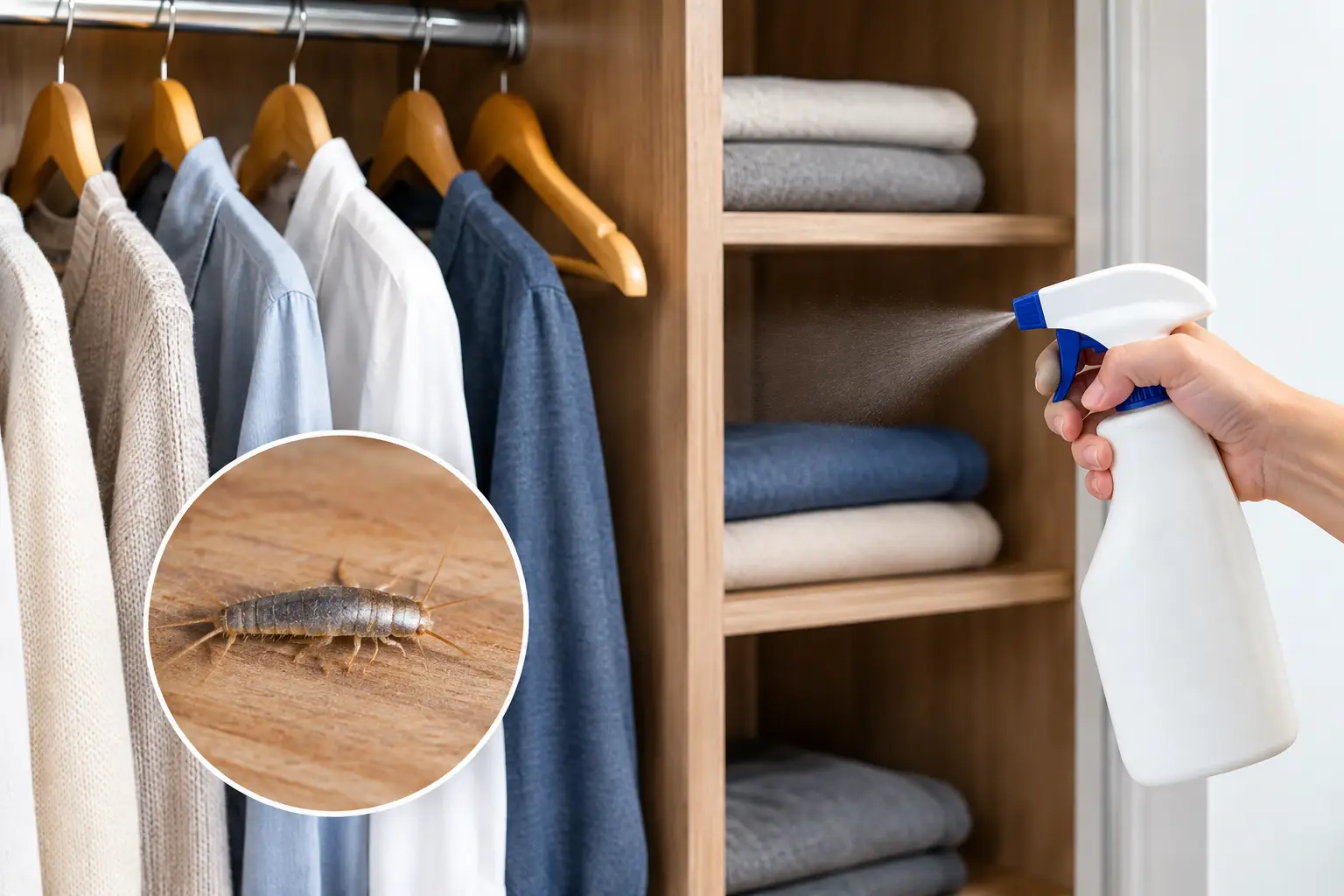
Finding tiny silvery insects darting from a wardrobe when you move clothes is unpleasant - especially if you have noticed holes, yellow marks or damaged papers. Effective silverfish treatment in wardrobes is not about spraying a scent over the problem. It means removing their food sources, treating the places they hide and correcting the moisture or access issue that allowed them in.
Silverfish are nocturnal and fast. By the time you see one, there may be more living in gaps around skirting boards, behind shelving, under carpet edges or in nearby linen cupboards. A quick, targeted response protects clothing, books, stored documents and the rest of the home.
Why silverfish choose wardrobes
Wardrobes offer the dark, undisturbed conditions silverfish prefer. They may feed on natural fibres, starches in clothing and linen, book bindings, cardboard boxes, wallpaper paste, dust, hair and crumbs. They are particularly attracted to wardrobes holding rarely used clothes, old papers or packed storage boxes.
Moisture often plays a role. A wardrobe on an external wall, beside a bathroom or laundry, or in a room with limited airflow can create a favourable hiding place. In Melbourne homes, condensation during colder months can add to the issue. However, not every infestation is caused by dampness. Some silverfish species can persist in relatively dry rooms, which is why simply running a dehumidifier does not always solve an established problem.
You may have silverfish activity if you find small irregular holes in cotton, linen or silk, yellowish stains, shed skins, pepper-like droppings, or damage to books and cardboard. Fabric damage can also be caused by clothes moths or carpet beetles, so correct identification matters before choosing a treatment.
Silverfish treatment in wardrobes starts with inspection
Before treating the wardrobe itself, inspect the surrounding room. Check shelf joins, screw holes, cracks in timber, gaps around skirting boards, carpet edges and the wall behind built-in units. Silverfish rarely sit in the open during the day, so the visible insect is usually not the full picture.
Look at what is stored inside as well. Cardboard cartons, old magazines and paper shopping bags can give silverfish both food and a sheltered place to breed. A wardrobe packed tightly to the wall is harder to inspect and clean, while clothes left on the floor create extra cover.
For a tenant, it is sensible to photograph damage and report the issue promptly to the property manager or landlord. Avoid shifting infested boxes or loose papers through the property before they have been checked. This can spread silverfish to another cupboard, bedroom or storage area.
A licensed technician can assess the likely species, activity level and harbourage points, then decide whether the wardrobe needs a focused treatment or whether the infestation has spread more widely through the home. This is especially useful when silverfish keep returning after cleaning or when valuable garments, records or collections are at risk.
What to do before treatment
Preparation makes a real difference. Empty the wardrobe where practical and sort items into washable, dry-clean-only and discard piles. Wash suitable clothing and linen according to the care label, then ensure everything is completely dry before returning it. Dry-clean delicate items if that is the safest option for the fabric.
Vacuum shelves, corners, floor edges and gaps around the wardrobe carefully. Use the crevice tool on joints and tracks, then empty the vacuum contents into a sealed bag and place it in the outside rubbish bin. Wipe hard shelves with a mild cleaner and allow them to dry fully.
Store clean seasonal clothing in sealed plastic tubs or garment bags rather than cardboard boxes. This reduces available food and makes future checks easier. Papers, photographs and documents are best kept in sealed containers away from damp external walls.
Do not spray insecticide directly over clothing, footwear, bedding, jewellery or personal documents. Household aerosol sprays can scatter silverfish deeper into cracks without reaching the main harbourage areas. They can also leave residue where you store personal items. If you are unsure whether an item has been affected, isolate it until it can be inspected and cleaned properly.
How professional wardrobe treatment works
A professional silverfish service should be specific to the property, not a one-size-fits-all spray. After inspecting the wardrobe and nearby rooms, the technician treats identified hiding areas such as cracks, crevices, wall-floor junctions, voids around built-in cabinetry and other harbourage points. Professional-grade products are selected and applied according to the location, pest pressure and household needs.
The aim is to target silverfish where they travel and shelter while keeping treatment away from stored belongings and food-contact surfaces. Depending on the infestation, treatment may also extend to nearby bedrooms, hall cupboards, linen storage, roof voids or other areas where activity is found.
A follow-up may be recommended where there is heavy activity, widespread harbourage or ongoing moisture concerns. Eggs and hidden insects can make an infestation appear to return after an initial visit, particularly when the property has many storage areas. Monitoring helps show whether activity is reducing and whether further work is needed.
All Guard Pest Control provides licensed, insured treatment for Melbourne homes and businesses, with practical advice on preparation and prevention so customers know what happens before and after the visit.
Preventing silverfish from coming back
Treatment works best alongside a few household changes. Keep wardrobes clean, dry and not overfilled, particularly in rooms that are rarely opened. Air the room regularly where possible, repair plumbing leaks and investigate recurring condensation or mould. If an external wall feels damp or a cupboard smells musty, address the building issue rather than masking it with fragrance products.
Reduce clutter in wardrobes and surrounding cupboards. Store books, craft materials, wrapping paper and important records in sealed containers. Regular vacuuming around skirting boards and under beds removes dust, hair and debris that can support pests.
Sticky monitoring traps can help confirm where activity is occurring. Place them along wall edges or inside an empty section of the wardrobe, out of reach of children and pets. They will not resolve a larger infestation on their own, but they are useful for checking whether silverfish are still active after treatment.
Avoid relying on mothballs or strongly scented repellents. These products may be unsuitable around family belongings, and they do not address the cracks, food sources or moisture conditions that allow silverfish to remain. A clean, dry and well-sealed storage space is far more reliable over time.
When to arrange professional help
Book an inspection if you are seeing silverfish regularly, finding fresh damage to clothing or papers, or noticing activity in more than one room. Professional help is also worthwhile for built-in wardrobes, heritage books, commercial stockrooms and rental properties where a clear treatment record is needed.
Fast action limits damage and avoids turning one affected wardrobe into a whole-home issue. Clear the space, protect the items you value and have the hiding places treated properly - that gives your wardrobe the best chance of staying clean, dry and silverfish-free.