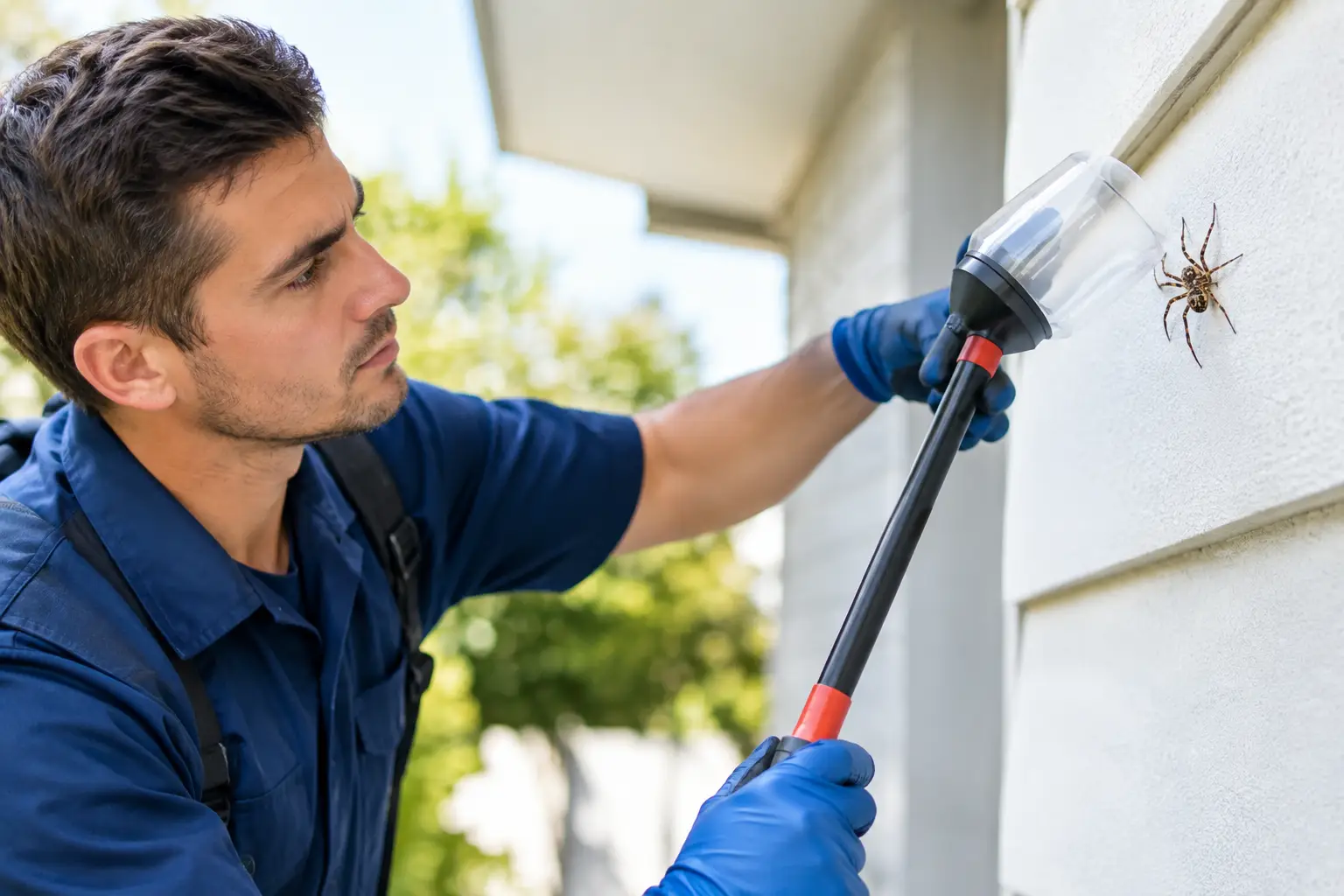
A spider in the corner of the ceiling is one thing. A redback near the back door, webs around a child’s cubby house or repeated sightings inside the kitchen are another. Safe spider removal Melbourne homeowners can rely on starts with avoiding unnecessary risk, then treating the conditions that keep spiders returning.
Most spiders found around Melbourne homes are not aggressive and play a useful role outdoors by feeding on insects. The problem is where they are nesting, how often they are appearing and whether people or pets can accidentally disturb them. If you are unsure what species you are dealing with, treat it cautiously and arrange professional advice rather than trying to identify it up close.
When a spider problem needs action
One wandering spider does not always mean an infestation. Spiders can enter through open doors, gaps around windows, vents and weep holes, particularly when they are following insects indoors. However, frequent sightings or established webbing usually point to a bigger issue around the property.
It is time to act when spiders are building webs around doorways, outdoor furniture, garages, sheds, fences or children’s play areas. You should also arrange treatment if you find egg sacs, notice spiders in cupboards or shoes, or keep seeing them in the same rooms after cleaning. Businesses should respond promptly where spiders are found near customer areas, storerooms, loading zones or staff facilities.
Redbacks deserve particular care. They often favour sheltered, dry spaces close to the ground, including under outdoor seating, barbecue areas, garden edging, letterboxes, sheds, toys and rubbish storage areas. Their messy webs can be hard to spot. Do not reach into a concealed space without looking first, and keep children and pets away until the area has been checked.
Why DIY spider removal can make the problem worse
A glass and piece of paper may be suitable for moving a clearly visible, harmless-looking spider from an indoor wall. But this approach is not a reliable solution for a property with recurring spiders. It removes one spider, not the webbing, egg sacs, hiding places or insect activity that may be supporting the population.
Spraying an unknown product directly into cracks, roof voids or around food-preparation areas can also create avoidable exposure risks. Some store-bought products have limited residual effect, while others are applied in the wrong location or at the wrong rate. Foggers are especially poor at reaching spiders hidden behind items, beneath furniture or in outdoor crevices.
There is also the risk of a bite when someone attempts to sweep, squash or pick up a spider. This is common when spiders are disturbed in shoes, gloves, garden tools, rolled-up tarps and stored boxes. If you cannot safely see the spider and its surroundings, leave it alone and arrange removal.
What safe spider removal involves
Professional spider control is not simply a quick spray around the skirting boards. A licensed technician first looks at where spiders are active, what is attracting them and where they can hide. That assessment matters because indoor and outdoor spider activity often has different causes.
Inside, attention may be given to cracks, window frames, behind appliances, wardrobes, garages and other low-disturbance areas. Outside, treatment commonly focuses on eaves, external walls, fences, sheds, patios, around doors and other likely harbourage zones. The right treatment plan depends on the spider activity, the property layout and whether children, pets or sensitive areas need additional consideration.
A professional service should also include clear preparation and aftercare advice. You may be asked to move outdoor items away from walls, clear webbing where safe to do so, keep pets out of treatment zones for a stated period and avoid washing treated surfaces too soon. These steps help the treatment perform properly and reduce the chance of spiders quickly re-establishing.
For active redback sites or a sudden high-volume spider issue, same-day assistance can be the sensible option. It is particularly useful before a property inspection, a move-in date, outdoor event or when a household member is highly anxious about spiders.
Make your property less attractive to spiders
Spider treatment works best alongside practical prevention. The goal is not to make a home completely insect-free overnight. It is to reduce the sheltered spaces and food sources that allow spiders to settle in.
Start by reducing clutter around the outside of the home. Stacked timber, unused pots, old furniture, cardboard, stored equipment and dense vegetation against walls all provide protected hiding spots. Keep stored items raised where possible, and use gloves when moving anything that has been left untouched for a while.
Lighting can also affect spider activity. Exterior lights attract flying insects, and those insects attract web-building spiders. Where practical, limit unnecessary lighting near doors and windows, or position lights away from entry points. Regularly clearing webbing from eaves and outdoor fixtures can help you spot new activity early, although cleaning alone will not resolve an established problem.
Check door seals, flyscreens, window gaps and damaged vents. Spiders can get through surprisingly small openings, especially around older frames and utility penetrations. Keeping other pests under control is equally useful. If flies, cockroaches or other insects are active around the home, spiders have a steady food source nearby.
Spider removal for rentals, strata and businesses
Tenants should document the issue with photos where safe, particularly if spiders are found in shared outdoor areas, sheds, garages or around entrances. Let the landlord or property manager know quickly if there are repeated sightings, visible nests or a possible redback site. The required response can depend on the tenancy arrangement and the condition causing the issue, but delaying an active problem rarely helps.
For strata properties, treatment may need to cover both a private lot and common areas such as bin rooms, car parks, stairwells, garden beds and mail areas. Treating only one balcony or courtyard may provide short-term relief if spiders are nesting in nearby shared spaces.
Commercial premises need a practical approach that protects staff, customers and operations. A café, warehouse, childcare setting or office may require treatment to be scheduled around access, cleaning routines and safety procedures. Licensed technicians can assess the site, target active areas and recommend follow-up prevention without disrupting the business more than necessary.
What to do if someone is bitten
Stay calm, keep the person still and seek medical advice promptly, especially if there is severe or worsening pain, sweating, nausea, breathing difficulty, dizziness or signs of an allergic reaction. Call emergency services if symptoms are serious. Do not try to catch the spider if doing so could lead to another bite.
For a suspected redback bite, seek urgent medical guidance. For other suspected spider bites, follow advice from a health professional. A photo taken from a safe distance may help with identification, but the person’s symptoms matter more than trying to name the spider.
Get the right help without taking chances
If spiders are appearing regularly, webbing is building up around your home or business, or you have found a possible redback site, professional treatment is the safer next step. All Guard Pest Control provides licensed, insured spider treatments across Melbourne, with free quotes, transparent starting prices and rapid booking options when the problem cannot wait.
Keep children and pets clear of the area, avoid disturbing concealed spaces and have the problem assessed properly. A quick, targeted response can make your property feel comfortable to use again.