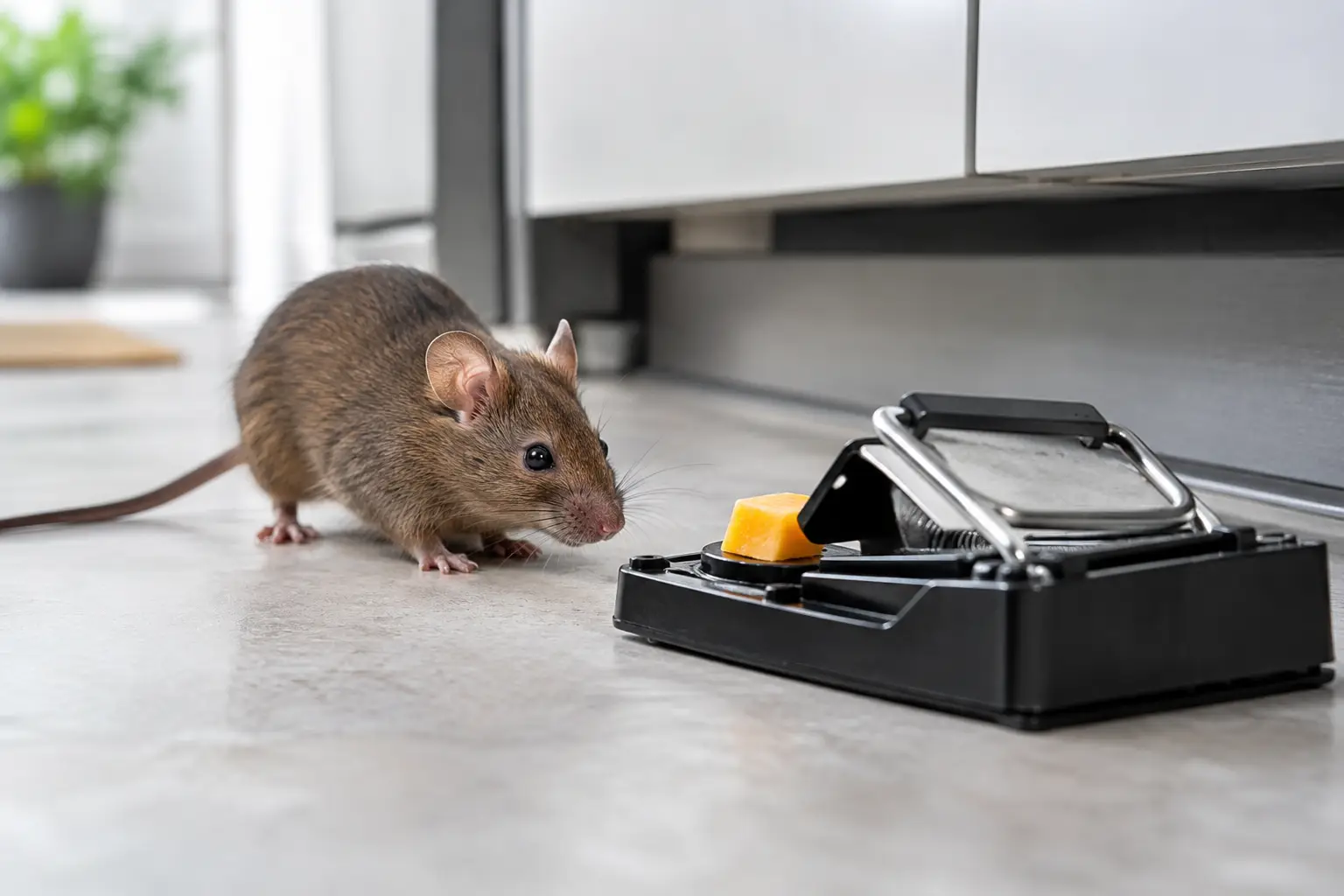
A scratching sound in the ceiling after dark, chewed food packets in the pantry or droppings behind the fridge usually means the problem has moved beyond a single rodent. Effective rodent trapping baiting is not about placing one trap and hoping for the best. It means finding where rodents are travelling, removing what is attracting them and using the right control method in the right location.
For Melbourne homes and businesses, speed matters. Rodents reproduce quickly, contaminate food and can damage wiring, insulation and stored stock. A prompt inspection gives you a clearer picture of the activity and helps stop a small issue becoming an ongoing infestation.
Why one trap rarely solves a rodent problem
Rats and mice are cautious, but their behaviour is predictable. They tend to travel along walls, behind appliances, through roof voids and around stored items rather than across open areas. If a trap is placed in the middle of a room or bait is left where rodents do not feel safe feeding, it may sit untouched.
The other issue is that rodents often have more than one food source. Crumbs under kitchen appliances, pet food left overnight, bird seed, open rubbish bins and food stored in thin packaging can all compete with a trap bait. In commercial settings, loading areas, storerooms, staff kitchens and waste zones can create the same challenge.
A reliable treatment starts with identifying the species, the likely nesting area, the routes being used and the food or water sources keeping rodents active. Mice can enter through gaps as small as a pencil width, while rats often exploit breaks around pipes, vents, doors and damaged exterior cladding. Control works best when these access points are addressed alongside trapping or baiting.
Rodent trapping baiting: choosing the right approach
Trapping and baiting are both useful, but they serve different purposes. The right option depends on the location, the level of activity, whether children or pets are present, and how easily the affected area can be monitored.
When trapping is the better option
Traps can be a practical choice when rodent activity is localised and the area can be checked regularly. They are often used inside kitchens, pantries, garages, roof spaces and commercial food-handling areas where immediate evidence of results is helpful.
Correct placement is more important than loading a room with traps. Traps should sit along active runways, close to walls and near signs such as droppings, gnaw marks or rub marks. A technician may initially use an unset trap or a small amount of non-toxic attractant to build confidence where rodents are particularly wary.
Trapping has a clear advantage where a carcass needs to be found promptly. However, it requires follow-up. An unmonitored trap may be ineffective, and simply moving it from place to place without understanding rodent movement can delay results.
When bait stations are appropriate
Tamper-resistant bait stations can be effective for sustained rodent pressure, especially around exterior perimeters, subfloors, warehouses, bin areas and other locations where rodents are entering or travelling. Professional stations are secured, labelled and positioned to reduce access by children, pets and non-target animals.
Baiting is not a set-and-forget job. Stations need to be inspected, refreshed where required and assessed against activity levels. If rodents are feeding heavily from a station, the technician needs to look beyond the bait and identify why the site remains attractive. If there is no feeding, that can indicate poor placement, an alternative food source or activity elsewhere.
For some properties, a combined approach is best: traps for active indoor areas and secured bait stations around entry zones. This is particularly common where a home backs onto parkland, construction sites, drains or open land, or where a business has regular deliveries and waste handling.
What a professional rodent inspection looks for
A proper inspection is more than a quick look in the roof. It should focus on evidence, access and conditions that allow rodents to stay.
Inside, this includes checking cupboards, behind appliances, roof voids, wall gaps, hot-water systems, under sinks and around utility penetrations. Outside, attention should go to weep holes, damaged flyscreens, garage doors, vents, pipework, sheds, bins and vegetation touching the building.
Signs are not always obvious. Fresh droppings are often dark and soft, while older droppings become dry and faded. Greasy rub marks along walls or pipes may point to repeated travel. Shredded paper, insulation or fabric can indicate nesting, while a musty odour in enclosed areas may signal established activity.
In northern and western Melbourne, rodent activity can increase as weather changes and rodents look for warmth, shelter and dependable food. New estates and nearby building works can also disturb nesting areas and send rodents towards occupied properties. The answer is not necessarily more bait. It is targeted control paired with practical exclusion work.
Make your property less attractive to rodents
Treatment is much more likely to hold when everyday conditions support it. You do not need a perfect house or workplace, but a few practical changes can make a real difference.
Keep dry food in hard, sealed containers rather than bags or cardboard boxes. Clean food spills promptly, including under the stove and fridge. Do not leave pet food out overnight, and make sure indoor and outdoor bins have tight-fitting lids. For businesses, regular cleaning beneath shelving, around equipment and in staff break areas is just as important as the front-of-house presentation.
Outside, keep stored materials off the ground where possible and avoid dense clutter against external walls. Trim back branches and plants that create an easy path to the roofline. Check that doors close cleanly and that gaps around pipes, cables and vents are sealed with suitable materials.
Exclusion is a major part of long-term rodent control, but timing matters. Sealing an entry point before confirming rodents have been removed can trap them inside, pushing them into another part of the building. A technician can advise on the order of treatment and proofing based on what is found.
Safety matters with rodent control
DIY rodent products can be tempting when droppings appear, but poor placement creates unnecessary risks. Loose bait should never be left where children, pets or wildlife could reach it. Food preparation areas need particular care, and commercial premises may have compliance requirements that call for documented monitoring and treatment.
There is also the risk of misreading the problem. A few droppings may be old, while a quiet roof space may still contain active rodents. Conversely, heavy bait use without entry-point control can lead to repeat activity month after month.
Professional treatment uses a site-specific plan, commercial-grade equipment and controlled application methods. It also gives you clear advice on what to expect after treatment, when follow-up is needed and what changes will help prevent rodents returning.
When to arrange professional help
Call for help promptly if you hear ongoing roof or wall noises, find repeated droppings, notice chewed electrical cables or discover food contamination. Businesses should act quickly when rodents are found near stock, kitchens, customer areas or staff facilities. Waiting can increase clean-up costs and disrupt normal operations.
All Guard Pest Control provides fast rodent assessments and treatment across Melbourne, with same-day bookings available where possible. Licensed, insured technicians can inspect the source of the activity, set up appropriate trapping or secured baiting, and recommend realistic prevention measures for your property.
Rodents do not usually disappear because conditions improve for a day or two. Acting early, checking the real entry points and using control methods that fit the site gives you the best chance of getting your home or business back to normal quickly.