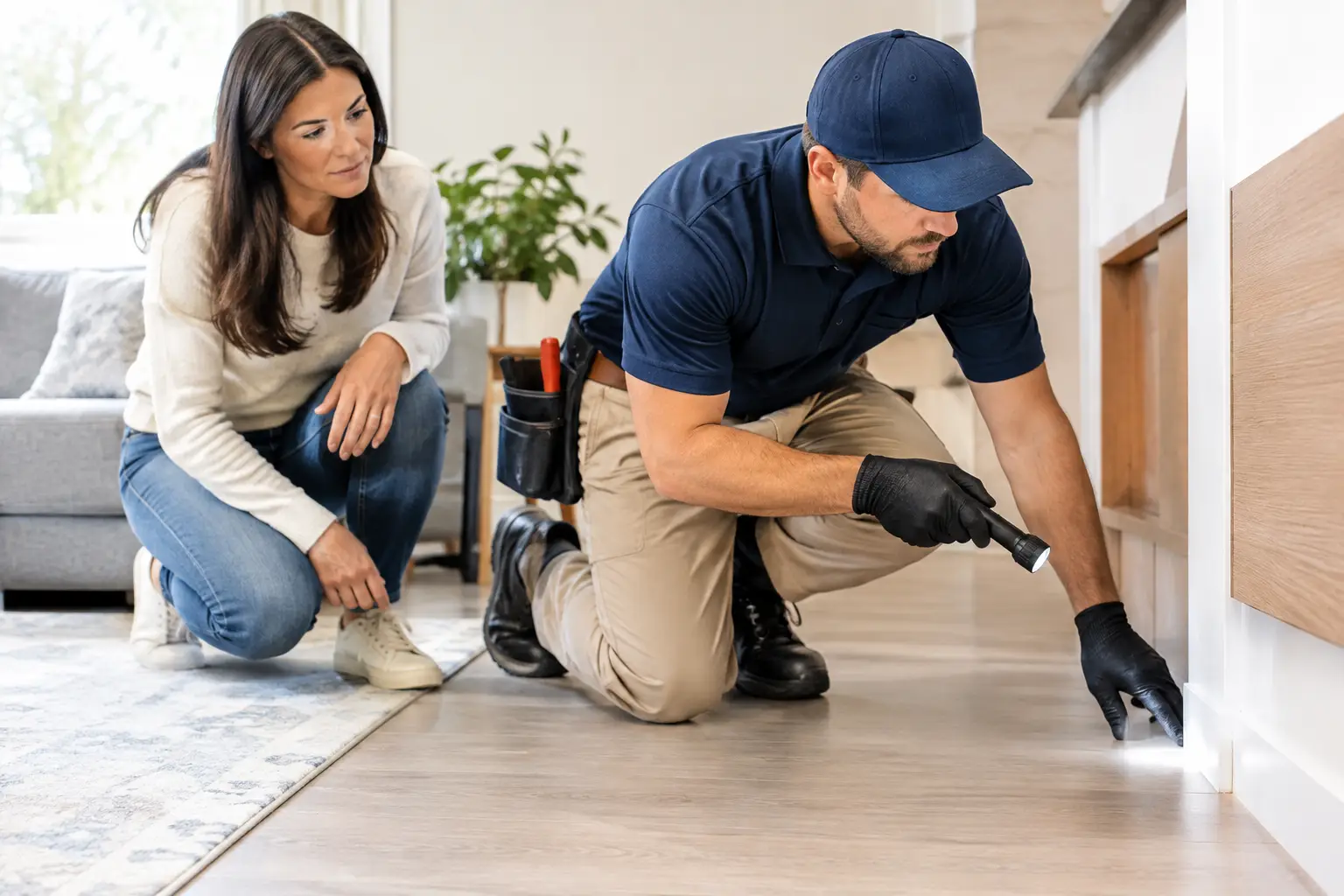
A termite treatment works best when the technician can inspect the right areas, reach likely entry points and apply the agreed solution without delays. Knowing how to prepare for termite treatment means less disruption on the day and a clearer path to protecting your property from further damage.
Termites can stay hidden in wall cavities, subfloors, garden timbers and concealed parts of the roof. Preparation is not about trying to find or disturb every termite yourself. It is about making key areas accessible, keeping people and pets safe, and following the instructions provided for your particular treatment.
Confirm what type of termite treatment is booked
Preparation depends on the treatment plan. A termite inspection, soil barrier treatment, baiting system, corrective treatment and pre-construction treatment all require different levels of access.
If your technician is carrying out a full inspection, they may need access to the subfloor, roof void, exterior walls, fences, garden edges and internal rooms. For a chemical soil treatment, clear access around the building perimeter is usually more important. A baiting program may require access to monitoring stations at regular intervals.
Before the appointment, ask what areas need to be available and whether you need to leave the property during or after treatment. A licensed technician should explain the plan in plain English, including any site-specific safety directions. Those directions always take priority over general preparation advice.
Clear access around the home
Termites often enter a building through concealed points close to the ground. Walls hidden behind stored items, garden beds pressed against the house and cluttered subfloor entries can make a thorough inspection or treatment harder.
Move furniture, storage boxes, pot plants and outdoor items away from walls where practical. Inside, clear a path to areas where you have noticed damage, mud tubes, bubbling paint, soft timber or doors that suddenly stick. There is no need to empty every room unless you have been asked to do so.
Outside, aim to leave a workable strip around external walls. Shift wheelie bins, firewood, timber offcuts, stacked pavers and stored materials away from the house. If vegetation is dense against the building, trim it back enough to give the technician clear visibility and access. This also helps identify moisture issues and timber-to-soil contact that can attract termites.
Make subfloor and roof access easy
Where a home has a subfloor or roof void, safe entry is essential. Unlock access hatches, remove items stored in front of them and make sure ladders or access points are stable. Let the technician know if there are low-clearance areas, damaged flooring, exposed wiring, water leaks or other hazards.
Do not enter a tight subfloor or roof space yourself if it is unsafe. Your role is to point out access and known concerns, not to take risks. If access is restricted, the technician can advise whether another arrangement is needed to complete the job properly.
Protect pets, children and food items
Treatment products are selected and applied by trained professionals, but sensible preparation reduces unnecessary exposure. Keep children and pets away from work zones while treatment is underway. Dogs, cats and other animals should be secured indoors away from treated spaces or taken out for the appointment if that is easier.
Aquariums need particular care. Tell the technician about fish tanks, ponds, aviaries and animal enclosures before work begins. They can provide instructions based on the treatment area and product being used. Never cover an aquarium tightly unless instructed, as this can affect oxygen levels.
In kitchens, pantries and food preparation areas, put away exposed food, utensils, pet bowls and children's toys if treatment is planned nearby. Wipe benches after the service if advised. Your technician will let you know when treated areas can be used as normal.
Do not disturb active termite activity
If you have found mud leads, damaged timber, swarmers or what looks like active termite activity, avoid pulling it apart, spraying it with supermarket insecticide or knocking it down. Disturbing termites can cause the colony to retreat and reappear somewhere harder to detect.
Take a clear photo if you can do so without touching the area, then leave it alone. Make a note of where you found it and when you first noticed it. This information can help the technician assess the likely activity and decide where to inspect first.
The same applies to damaged timber. Do not remove skirting boards, open walls or rip up flooring before the inspection unless instructed. What looks like a small patch of damage can be part of a larger concealed issue, and the surrounding evidence matters.
Prepare the outside areas properly
External preparation is often the biggest factor in how efficiently a termite treatment can be completed. If the treatment involves the building perimeter, make gates accessible and ensure the technician can reach both sides of the home, garage and any separate structures.
Turn off sprinklers before the appointment and avoid watering areas that may be treated, unless you have been given different instructions. Wet ground, drainage problems and recent rain can affect what treatment options are suitable. A professional will assess conditions on arrival and advise if any part of the work needs to be adjusted.
Let the technician know about underground services, stormwater lines, irrigation, solar conduits, recent renovations, extensions and new landscaping. These details help avoid damage and allow treatment to be planned safely. If you have building plans or records of past termite work, have them available.
Plan for access, timing and communication
On the day, make sure someone authorised to approve work and answer questions can be reached by mobile. If you cannot be home, arrange access in advance and provide clear instructions about gates, alarms, parking and pets.
For rentals, tenants should notify the landlord or property manager promptly if termite activity is suspected. Property managers and owners should provide the technician with permission to inspect and treat relevant areas, especially where access crosses shared spaces or neighbouring boundaries.
Commercial sites may need extra planning. Arrange access to plant rooms, storage areas, kitchens, false ceilings and loading zones, and alert staff to keep clear of treatment areas. Scheduling work outside peak trading times can reduce disruption, but it depends on the type and extent of the treatment.
What to expect after the treatment
Before the technician leaves, ask what has been completed, which areas were treated and whether any conditions need correcting. You should also receive clear advice on re-entry times, cleaning, watering, monitoring and follow-up visits.
Do not rush to repaint, seal, landscape or cover treated zones until you know it is suitable to do so. For example, soil barriers and bait stations need to remain accessible for monitoring, while moisture leaks, blocked ventilation and timber in contact with soil may need separate repairs to reduce future termite risk.
Termite treatment is not always a one-visit matter. Active infestations can require monitoring and follow-up work, while ongoing inspections are the practical way to identify new activity early. Melbourne homes can face different termite pressures depending on construction style, drainage, gardens and nearby vegetation, so the right prevention plan is property-specific.
If you have seen suspicious damage or need a treatment arranged quickly, clear the access you can, leave any activity undisturbed and organise a professional assessment. All Guard Pest Control can provide practical preparation advice before the technician arrives, so the visit can focus on protecting your home rather than working around avoidable delays.