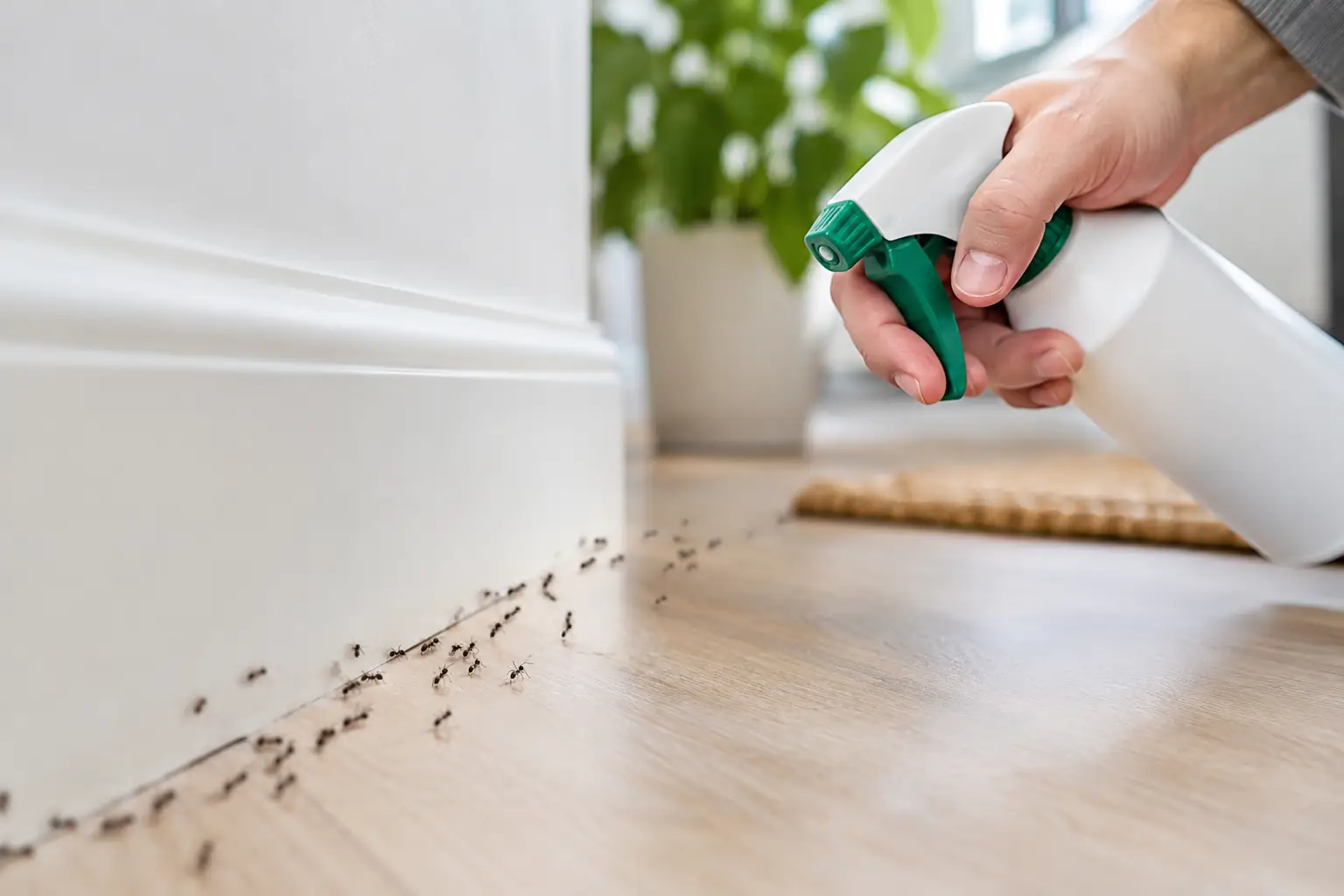
A trail of ants across the kitchen bench is rarely just a few insects taking a wrong turn. It usually means scouts have found food, water or a way inside, and they are directing the colony to it. Knowing how to get rid of ants indoors means dealing with that trail while also stopping the nest that keeps sending more ants back.
Spraying the ants you can see may give quick relief, but it often does not solve the source. A practical approach combines cleaning, targeted baiting, entry-point checks and professional treatment when activity will not settle.
Start by finding what is attracting them
Ants commonly enter Melbourne homes looking for moisture and an easy meal. Sweet spills, crumbs under appliances, pet food bowls, ripe fruit and unsealed pantry goods are obvious targets. They will also feed on grease, protein-based foods and rubbish residue, so a spotless-looking kitchen can still offer enough to sustain a trail.
Follow the ants rather than simply wiping them away. Look along skirting boards, window frames, pipes under the sink, pantry shelves and cracks around doors. The trail may lead to a tiny gap you had not noticed, or it may disappear into a wall cavity where the colony is nesting nearby.
Pay attention to when and where you see activity. Ants around a leaking tap or bathroom vanity point to moisture. A line that appears after cooking is more likely food-driven. Ants emerging from wall gaps, power point surrounds, flooring or cupboards can indicate a nest inside or immediately beside the building.
How to get rid of ants indoors step by step
The best results come from doing a few simple things in the right order. Remove the food source first, then use bait where ants are actively travelling. This helps workers carry the treatment back to the colony rather than simply killing a small number on the surface.
Clean away the scent trail
Ants use scent trails to guide other workers to food. Wipe benches, cupboard edges, floors and the route they are using with warm soapy water. Pay close attention to the edge of splashbacks, around the toaster, beneath the microwave and under the fridge.
Vacuum crumbs from cupboards, drawers and along skirting boards, then empty the vacuum outside. Store dry food in sealed containers, rinse recyclable containers before placing them in the bin and keep rubbish bins closed. Do not leave pet food down overnight if ants are targeting it.
Cleaning is not a complete treatment, but it removes the reward that keeps the trail active. It also makes bait far more appealing.
Use ant bait, not just surface spray
For most indoor ant problems, a suitable commercial ant bait is more effective than an aerosol spray. Baits are designed to work slowly. Worker ants take them back to share with other ants, including the queen and developing colony.
Place bait stations or small bait placements near active trails, but not directly on food-preparation surfaces. Keep them away from children and pets, and always follow the product label. Avoid spraying insecticide over or near bait, as this can repel ants before they collect it.
You may see more ants around a bait at first. That is often a positive sign: the workers have accepted it and are recruiting more ants. Leave the bait undisturbed for several days and replace it if it dries out or is fully consumed.
Bait preferences can vary. Some ants favour sweet baits, while others are drawn to protein or grease-based foods. If ants ignore one correctly placed bait, a different formulation may be needed. Repeatedly swapping products every few hours, however, gives you no clear chance to see what is working.
Seal gaps once activity is reducing
After cleaning and baiting, check likely entry points. Seal small gaps around pipe penetrations, window frames, skirting boards and external door frames where practical. Fit door seals if there is a visible gap beneath an external door, and repair damaged flyscreens.
Do not seal every crack immediately if ants are actively using it and you have just placed bait nearby. You want workers to keep taking the bait back to the colony. Once activity has noticeably reduced, closing access points helps prevent a new trail from forming.
Fix moisture problems around the home
Ants need water as well as food. Repair dripping taps, clear slow drains and avoid leaving wet sponges or dishcloths on the bench overnight. Check under sinks, behind dishwashers and around hot-water systems for moisture or minor leaks.
Outside, make sure garden beds, mulch and stored items are not creating easy pathways against the home. Trim vegetation away from walls where possible, and avoid stacking timber or pots directly against the building. These changes will not remove every species, but they reduce the sheltered conditions ants use to nest close to the house.
Why spraying visible ants often fails
A surface spray kills ants it touches, which can be useful for immediate relief when they are in a high-traffic area. The limitation is that those ants are usually workers, not the colony itself. If the queen and nest remain undisturbed, new workers can appear within days.
Some ant species may also split or relocate when heavily disturbed. This can turn one obvious trail into several smaller, harder-to-track trails. That is why a bait-led approach, backed by inspection and prevention, is generally the more reliable option for indoor activity.
Be cautious with home remedies such as vinegar, essential oils or boiling water. They may disrupt a trail temporarily, but they do not reliably remove an established nest in wall voids, under concrete or around the property. They can also damage some surfaces or create avoidable risks when used in the wrong place.
When ants indoors need professional treatment
A small trail that stops after cleaning and baiting may be manageable. Persistent or widespread activity is different. Professional treatment is worth arranging when ants keep returning, are appearing from multiple rooms, are nesting in wall cavities, or are affecting a food business, rental property or shared building.
Some signs need quicker attention. These include ants around electrical fittings, large numbers of winged ants indoors, biting or stinging ants, or activity that continues despite several days of correctly placed bait. Winged ants can be reproductive ants from a mature colony, although they are not automatically a sign of termites. A licensed technician can identify what you are dealing with and recommend the appropriate treatment.
For businesses, ant activity can affect hygiene standards, customer confidence and staff comfort. A targeted inspection can identify entry points, nesting zones and sanitation issues without relying on guesswork or repeated off-the-shelf sprays.
What a professional ant treatment involves
Effective ant control starts with identifying the species, the active trails and the likely nesting areas. The technician may use professional-grade bait, targeted residual treatment or a combination of methods depending on the ant species, building layout and level of activity.
The goal is to treat the colony while reducing the chance of re-entry. You should receive practical advice about cleaning, moisture control and any exclusion work that will improve the result. Treatment timing can vary, because baiting relies on ants carrying product back through the colony rather than delivering an instant knockdown.
All Guard Pest Control provides licensed, insured ant treatments for homes and businesses across Melbourne, with fast bookings available when an infestation needs attention. A proper assessment is particularly useful when ants are repeatedly emerging indoors or the source cannot be located.
Keep ants from coming back
Once the trail has stopped, a few regular habits make a real difference. Wipe food spills promptly, keep pantry items sealed, take rubbish out regularly and check under appliances during your normal clean. After heavy rain or hot weather, inspect around doors, windows and plumbing areas, as changing conditions can push ants indoors.
Ants are persistent, but they are predictable: remove what is attracting them, give active workers the right bait, and close off the easy routes once the colony is under control. If the activity keeps returning, prompt professional treatment can restore your home or workplace to normal without the frustration of starting over each week.