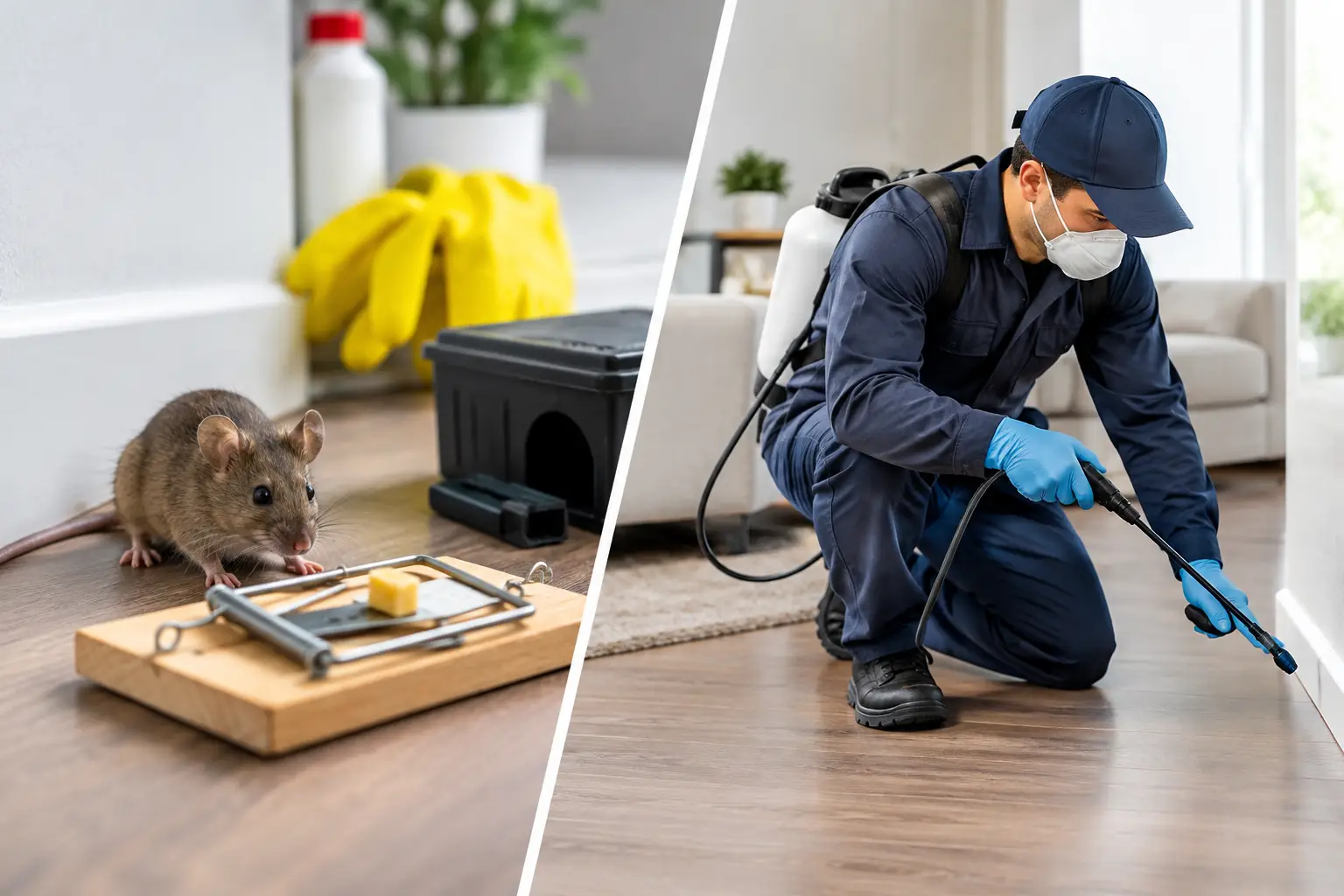
Scratchy noises in the ceiling after dark, droppings behind the fridge, or chewed pantry packets can turn a small concern into a stressful problem quickly. When weighing up DIY vs professional rodent control, the right choice comes down to the size of the infestation, where rodents are travelling, and whether you can remove the cause as well as the animals.
A single mouse sighting does not always mean a major infestation. But rodents breed quickly, contaminate food, damage wiring and insulation, and can move through wall cavities, roof spaces and under-floor areas without being seen. Acting early gives you more options. Waiting until the noises get louder usually makes treatment more involved.
DIY vs professional rodent control: the practical difference
DIY control is often aimed at catching or killing the rodent you can see. Professional rodent control is designed to find the wider activity, reduce the current population and help stop another one taking its place. Neither option is automatically right for every property, but they deliver very different levels of certainty.
DIY can be a sensible first step for a minor, contained issue. Professional help is generally the better call when there are repeated signs, rats are involved, the source is unclear, or people, pets and food are at risk.
When DIY rodent control can work
For an isolated mouse in a tidy home, a good-quality trap placed correctly may solve the immediate problem. Traps are most effective when positioned along walls, behind appliances, inside cupboards or near fresh droppings, rather than left in the middle of an open room. Rodents prefer to travel beside edges where they feel protected.
DIY work also needs prevention. Store dry food in sealed containers, clean crumbs from under appliances, keep pet food off the floor overnight and make sure rubbish bins have secure lids. Check around pipes, vents, doors and damaged screens for gaps. A mouse can enter through an opening far smaller than most people expect.
This approach is worth trying when there is one clear point of activity, no ongoing roof or wall noises, and no new evidence after a few days. Keep monitoring rather than assuming one catch means the job is finished.
Where DIY methods fall short
The biggest issue with DIY bait and traps is that they do not tell you why rodents are there. A trap in the kitchen may catch one mouse while another route from the roof, subfloor or garage remains active. If access points, food sources and nesting areas are not addressed, the problem can return within weeks.
Rats are particularly difficult to manage with a do-it-yourself approach. They are cautious around new objects, can avoid poorly placed traps and may nest in inaccessible spaces. A rat that dies inside a wall or ceiling can also create an unpleasant odour and leave you with another problem to solve.
Store-bought baits have limitations as well. The wrong product, placement or amount can be ineffective, while unsecured bait can pose risks to children, pets and non-target wildlife. Rodent activity near food preparation areas, childcare settings, restaurants, warehouses or shared residential buildings needs a more controlled response.
What professional rodent treatment changes
A professional technician starts with inspection, not guesswork. That means looking for droppings, rub marks, gnawing, entry points, nesting material and travel paths, then identifying whether the issue is likely mice, rats or both. The treatment is selected for the property and the level of activity, rather than relying on one product for every situation.
Inspection identifies the real route
In Melbourne homes, rodents commonly enter through gaps around utility pipes, damaged roof tiles, open weep holes, poorly sealed garages and vents. Overgrown vegetation, cluttered storage areas, bird seed and accessible pet food can make a property more attractive too. Finding these contributing factors is often the difference between a short-term reduction and lasting control.
A technician can advise on practical proofing work, including sealing suitable gaps, repairing screens and changing storage habits. Some exclusions need to be completed carefully so rodents are not simply trapped inside the building or redirected into another area.
Treatment is targeted and monitored
Licensed technicians use professional-grade equipment and products, applying them in controlled locations. Tamper-resistant stations and strategic trap placement help protect households, staff and customers while treating active rodent pathways. Follow-up monitoring is especially valuable where activity has been established or where a property has multiple potential entry points.
For tenants and landlords, professional documentation can also make communication clearer. It records the signs found, treatment performed and recommendations for maintenance or repairs. In commercial premises, this level of accountability helps protect hygiene standards and business operations.
All Guard Pest Control provides licensed, insured rodent treatment for homes and businesses, with rapid booking options when the problem cannot wait.
The real cost is not always the upfront price
DIY rodent control usually looks cheaper at the checkout. A few traps or bait packs may cost far less than a service visit, and for a one-off mouse, that can be reasonable. The cost changes when people repeatedly replace traps and bait without stopping the activity, or when rodents damage cables, pantry stock, insulation or stored goods.
Professional treatment has a higher initial cost because it includes inspection, targeted control and advice on prevention. It may save money where an infestation is already established, particularly in roof spaces, rental properties and workplaces where delays can lead to greater damage or complaints.
The useful question is not simply, “What is cheapest today?” It is, “What will actually stop this problem at my property?” If the answer involves unknown entry points, recurring droppings or rodents in inaccessible areas, a professional assessment is usually the more efficient choice.
Safety matters around bait, pets and food
Rodenticides should never be treated as a set-and-forget solution. Always follow the label, keep products away from children and animals, and never place loose bait where pets or wildlife can access it. Avoid using bait in areas where it could contaminate food, utensils or food-storage surfaces.
Traps need care too. Place them where children and pets cannot reach them, check them regularly and wear gloves when handling rodents or droppings. Do not sweep or vacuum dry droppings, as this can disturb contaminated dust. Use gloves, lightly dampen the area with disinfectant and clean it carefully.
If you have young children, pets, poultry, or a property close to bushland, controlled professional placement is a safer option than spreading products around the home or yard.
Signs it is time to call a professional
Do not wait for rodents to become a larger problem if you notice any of the following:
- Repeated droppings, fresh gnaw marks or food packaging damage
- Noises in walls, ceilings or under floors, especially at night
- Rats in the roof, garage, garden shed or business premises
- A strong urine smell, nesting material or insects gathering around a dead rodent
- DIY traps or bait that have not reduced activity after several days
Urgent action is particularly worthwhile if electrical cables have been chewed, food stock may be contaminated, or the property is shared by tenants, customers or staff.
A faster path to a rodent-free property
Whether you start with a trap or arrange treatment straight away, focus on evidence and prevention. Keep notes on where you see droppings or hear noises, secure food and rubbish, and avoid moving bait or traps randomly from room to room. Clear information helps identify the route rodents are using.
For a small, isolated issue, careful DIY control and proofing may be enough. For persistent activity, rats, roof-space noises or any situation where safety is a concern, a prompt professional inspection gives you a clearer answer and a practical plan to get your property back under control.