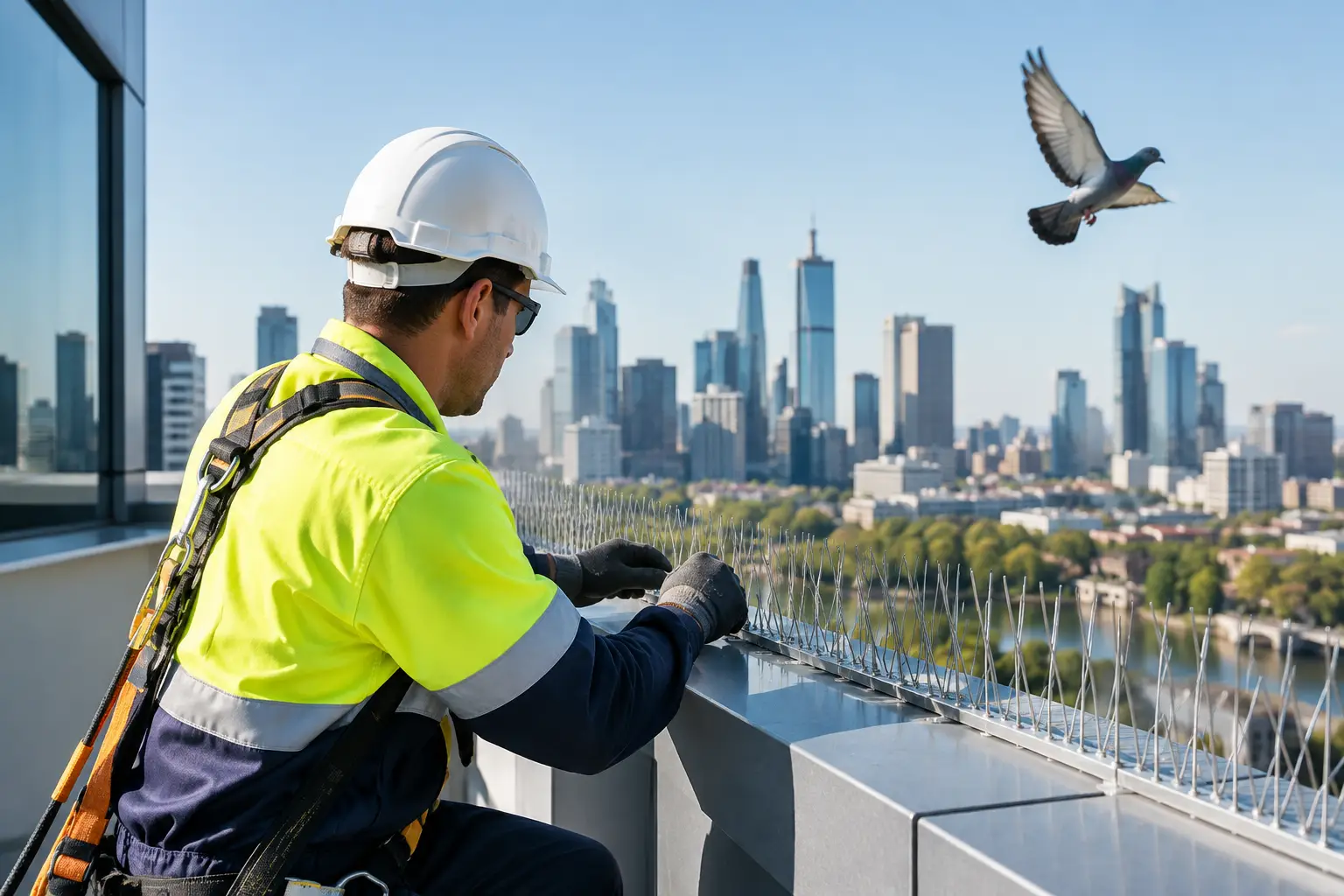
A few pigeons on a loading dock can quickly become a much bigger property problem. Droppings make paths slippery, nesting materials block gutters and vents, and persistent bird activity can affect customer confidence. Effective bird proofing for commercial buildings deals with the reasons birds return, not just the mess they leave behind.
For Melbourne business owners, facility managers, strata managers and landlords, the best result is usually a planned exclusion system installed around the areas birds use most. The right approach protects the building, supports hygiene standards and keeps disruption to staff and tenants to a minimum.
Why birds become a commercial property issue
Birds are looking for three things: food, shelter and a safe place to roost or nest. Commercial sites often provide all three. Open rubbish areas, outdoor dining spaces, warehouse canopies, signage, plant rooms, roof voids and loading bays can become reliable bird shelters.
Pigeons are a frequent issue across commercial buildings, particularly around CBD and inner-suburban premises. Starlings, sparrows, mynas and gulls may also create problems depending on the site, nearby food sources and building design. The species matters because access points, behaviour and suitable control methods can differ.
Droppings are not simply an appearance issue. They can create slip hazards at entrances and walkways, stain cladding and signage, affect stock stored in open loading areas, and accelerate deterioration on some surfaces. Nests and feathers can also clog drains, damage air-conditioning equipment and attract insects.
For food businesses, medical facilities, schools, warehouses and sites with high visitor traffic, leaving bird activity unchecked can create a hygiene concern that is hard to explain away. Acting early is generally less disruptive and less costly than cleaning up an established roosting site.
Start with a site assessment, not a one-size-fits-all fix
The most effective bird control begins with inspecting the property from ground level through to roof access areas where safe. A professional assessment identifies where birds land, roost, nest, enter and feed. It should also consider what is drawing them to the building in the first place.
Common problem areas include roof edges, parapets, solar panels, awnings, roller-door tracks, air-conditioning units, under-canopy beams, balconies, service yards and external signs. On warehouses and industrial buildings, birds often settle high above floor level where the issue is easy to miss until droppings build up below.
An inspection should distinguish between occasional bird activity and an established roost. A few birds passing through may only require minor preventative work. A site with nests, repeated droppings, damaged insulation or blocked drainage needs a more comprehensive plan that combines cleaning, exclusion and ongoing checks.
It is also important to check for active nests before any work starts. Bird control must be carried out humanely and with proper consideration for protected wildlife and nesting activity. A qualified technician can recommend an appropriate, lawful method for the situation rather than creating a new problem by removing materials at the wrong time.
Bird proofing for commercial buildings: choosing the right method
There is no single product that suits every commercial building. The best method depends on the bird species, the surface being protected, access requirements, heritage or appearance considerations, and whether birds are roosting, nesting or entering an enclosed space.
Netting for large openings and enclosed areas
Bird netting is often the most reliable option for warehouses, loading docks, roof voids, car parks, balconies and open-sided structures. When correctly fitted, it physically prevents birds from accessing the protected area without harming them.
Netting needs to be tensioned and fixed properly. Poorly installed netting can sag, leave gaps around edges or become a maintenance issue in its own right. On commercial premises, the installation should also allow for access to lights, services, fire equipment and areas that require regular inspection.
Spikes and wire systems for ledges and signs
Bird spikes and tensioned wire systems can be suitable for narrow ledges, window sills, beams, signs, pipes and roof edges where pigeons regularly land. These systems make the perch uncomfortable or unavailable, encouraging birds to move elsewhere.
They are not suitable for every surface. Spikes on a broad ledge can leave enough room for birds to nest behind or between sections if the coverage is poorly planned. They can also look untidy on prominent façades if installed without care. A site assessment helps match the system to the structure and visual expectations of the property.
Mesh and sealing for entry points
Birds entering roof voids, eaves, vents or plant areas may need access points sealed with durable mesh or purpose-built barriers. This approach is particularly useful where sparrows or starlings are getting into enclosed spaces.
The work must be completed only after confirming birds are not trapped inside. A proper exclusion plan provides a way for birds to leave where required, then closes access once the area is clear.
Deterrents and site management
Visual deterrents, sound devices and repellent products can have a limited role, but they are rarely a dependable stand-alone answer for a busy commercial site. Birds quickly learn when a device does not pose a real barrier, especially if food and shelter remain available.
Simple site management makes physical proofing work better. Keep rubbish bins closed, clean food spills promptly, avoid leaving pet food or scraps in service yards, and make sure staff do not feed birds near entrances. If outdoor dining is part of the business, regular table clearing and covered waste stations can substantially reduce bird pressure.
Clean-up is part of the control plan
Before exclusion systems are fitted, affected areas may need professional cleaning and sanitising. Old nesting material and droppings can continue to attract birds through scent and familiar roosting cues. More importantly, cleaning allows the installer to inspect the underlying surface for corrosion, damaged flashing, blocked gutters or other maintenance issues.
This is not a job for an unprepared staff member with a broom. Dry sweeping can disturb contaminated dust, while working at height introduces obvious safety risks. Commercial bird clean-up should be planned with suitable protective equipment, safe access and appropriate waste disposal.
Once the area is clean, the proofing system can be installed on a clear surface and checked for gaps. This gives the property manager a visible baseline for future maintenance.
What ongoing maintenance looks like
Bird proofing is designed to reduce ongoing work, but it is not always fit-and-forget. Storms, building works, roof trades and general wear can affect netting, fixings and seals. Properties with solar panels, extensive roof plant or high bird activity benefit from scheduled inspections.
A practical maintenance programme checks that barriers remain secure, gutters and drains are clear, rubbish areas are managed and no new roosting points have developed. It also gives managers the chance to address small issues before birds establish a new nesting area.
For multi-tenant buildings, clear responsibility matters. The landlord may manage roof-level proofing, while tenants need to keep balconies, outdoor dining areas or rear service spaces free from food waste. Without that shared approach, bird activity can simply shift from one part of the building to another.
When to call for professional bird control
Call for an assessment when droppings are building up around entryways, birds are entering a roof space or warehouse, gutters are blocked by nesting materials, or customers and staff are being affected. Urgent assistance is also sensible where birds are contaminating food-handling areas or creating a slipping risk.
All Guard Pest Control can assess commercial bird activity across Melbourne and recommend practical exclusion and prevention options for the building. Licensed technicians can help identify the access points, determine the right proofing method and complete the work with minimal interruption to your operations.
A clean, bird-free entrance and service area tells customers that the property is cared for before they step through the door. Deal with the first signs of roosting early, and you can protect the building without turning a manageable issue into an ongoing maintenance headache.