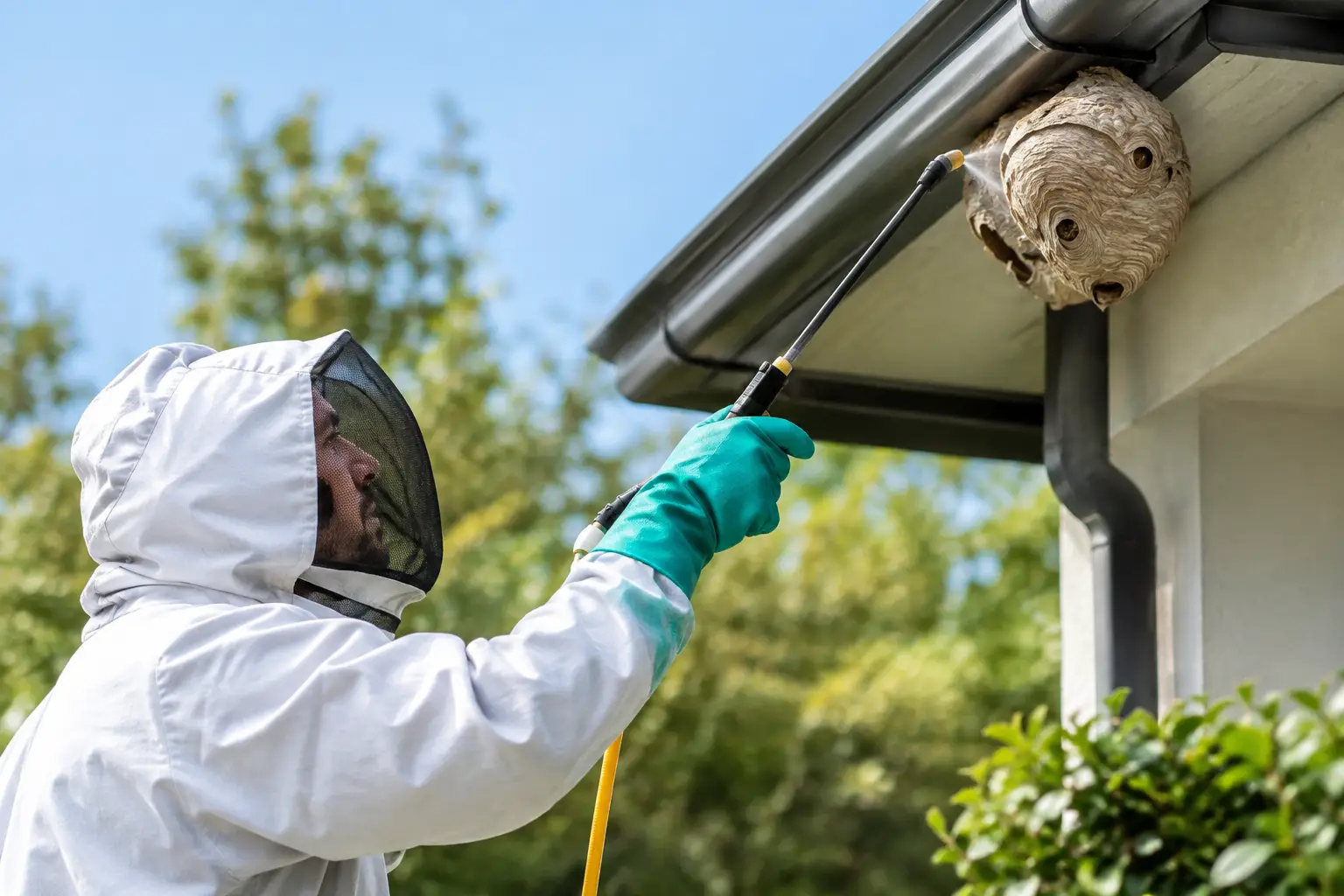
A wasp nest can turn a quiet backyard, entryway or worksite into a place people avoid. The best wasp removal options depend on where the nest is, how active it is and whether anyone nearby has an allergy. A small, accessible nest may be manageable with care, but a nest near doors, children, pets or customers calls for a faster professional response.
Wasps can become defensive when their nest is disturbed. The priority is not simply getting rid of what you can see. It is removing the nest safely, reducing the chance of stings and preventing the same sheltered spot from becoming a problem again.
When a wasp nest needs urgent action
Treat a nest as urgent when it is close to a front door, outdoor dining area, playground, balcony, shed access point or a busy business entrance. Activity also matters. A steady flow of wasps entering and leaving a gap in a wall, roofline or garden structure can indicate a larger nest hidden from view.
Do not attempt a close inspection if wasps are circling, chasing people or gathering in numbers. Keep children and pets indoors, move away from the area and avoid mowing, trimming or banging near the nest. If a person has signs of a serious allergic reaction after a sting, such as difficulty breathing, swelling of the face or throat, dizziness or collapse, call 000 immediately.
Best wasp removal options by nest location
The right approach changes considerably between a small paper nest under an eave and a concealed colony inside a wall cavity. Removing a visible nest without addressing a hidden access point can leave you with more wasp activity, not less.
Professional wasp nest treatment
For active nests, professional treatment is usually the safest and most reliable option. A licensed technician can identify the likely nest position, assess access and use professional-grade products suited to the situation. This is particularly valuable for nests in roof voids, wall cavities, high eaves, dense shrubs, under decking or around electrical equipment.
The treatment approach may involve applying a targeted product to the nest or entry point, then allowing returning wasps to carry the treatment into the colony. The technician can advise when the area is safe to use again and whether nest removal is necessary after activity has stopped.
This option is the sensible choice for large nests, difficult access, repeated wasp activity or properties where a sting could create a serious risk. It also avoids the common mistake of spraying a nest from a ladder, then losing balance as wasps emerge.
DIY treatment for small, exposed nests
A DIY wasp spray can be appropriate only for a small, fully exposed nest that is easy to reach from the ground and well away from people, pets and entrances. Read the product directions carefully, wear covered clothing and plan an immediate retreat path before starting.
Never treat a nest while standing on a ladder, through a narrow doorway or when you cannot move away freely. Do not use fire, boiling water, petrol, smoke or improvised methods. They can cause injury, damage property and provoke a large number of wasps without resolving the nest.
Even with a small nest, avoid treatment during windy conditions or when you are alone. If there is any uncertainty about the nest size, species or access, professional removal is the safer call.
Wait and monitor only when the nest is inactive and isolated
Some nests are small, seasonal and positioned well away from daily activity. If there is no regular wasp traffic and the nest is not near living or working areas, monitoring may be reasonable for a short period. However, this is not a solution for a nest that is growing, becoming more active or positioned near a high-traffic area.
Do not assume a nest is abandoned because there are no wasps visible at one moment. Activity can vary with weather and time of day. A technician can confirm whether treatment is needed rather than leaving you to guess.
Why hidden nests are different
Wasps often build in sheltered spaces, including roof voids, wall gaps, vents, sheds, fence cavities and under raised decking. You may only notice a stream of wasps disappearing into a small crack. Blocking that opening straight away is usually a bad idea, as it can force wasps into another part of the building or trap them inside.
A professional treatment targets the colony first. Once activity has ceased, the entry point can be sealed as part of sensible maintenance. This sequence matters, especially around homes and commercial premises where wasps could otherwise find their way into occupied rooms.
What to do before the technician arrives
Keeping the area calm and clear makes treatment safer and quicker. Close nearby windows and doors, bring washing in, and keep pets inside. If the nest is near a business entrance, direct staff and customers to another access point where possible.
Avoid spraying the nest before an inspection unless you are carrying out a planned DIY treatment of a small, accessible nest. Partially treated nests can make wasps more defensive and may complicate assessment. If you can do so from a safe distance, note where the wasps are entering, the times of heaviest activity and whether the nest is visible. These details help the technician locate concealed nests efficiently.
Reducing the chance of wasps returning
Wasp prevention is mostly about reducing protected nesting spots and easy food sources. Check eaves, pergolas, sheds and outdoor structures for small gaps before warmer weather. Repair damaged flyscreens, secure loose roof sheeting and consider sealing cracks around external vents once you are certain there is no active nest inside.
Outdoor bins should have secure lids, particularly at cafés, warehouses and shared residential properties. Clean up drink spills, food scraps and fallen fruit promptly. In gardens, keep shrubs trimmed away from doors and walkways so nests are easier to spot before they become established.
Prevention has limits. Wasps can build quickly in places that looked clear only days earlier. Regular checks around outdoor living areas are worthwhile through spring and summer, especially after you notice the first few wasps investigating eaves or garden structures.
Choosing a wasp removal service
When comparing professional options, look beyond the lowest advertised price. Ask whether the provider is licensed and insured, whether they can treat concealed nests, what access equipment may be required and what happens if wasp activity continues after treatment. Clear answers matter when the nest is close to people or business operations.
Fast availability can be just as important as the treatment itself. Same-day help is valuable when a nest is near a doorway, school pick-up area, customer seating or a family backyard. A free quote before work begins also gives you clarity on the likely approach and cost.
For Melbourne homes and businesses, All Guard Pest Control provides licensed wasp treatment with rapid booking options, including urgent assistance where available. The aim is straightforward: deal with the active nest safely, explain what has been done and help you use the space with confidence again.
A wasp problem rarely improves by repeatedly disturbing it. Keep your distance, choose the removal method that matches the risk, and arrange professional help promptly when the nest is active, hidden or close to the people who rely on your property every day.